GOLD 1555.68 $/ozChange: 12.03
PLATINUM 1417.00 $/ozChange: 2.00
R/$ exchange 8.36Change: -0.01
R/€ exchange 10.48Change: 0.09
 
We have detected that the browser you are using is no longer supported. As a result, some content may not display correctly.
We suggest that you upgrade to the latest version of any of the following browsers:
         
close notification
powered by
Advanced Search


Home
 
Sector News
 
Ferrous Metals
 
Iron-ore
 
 
IRON-ORE
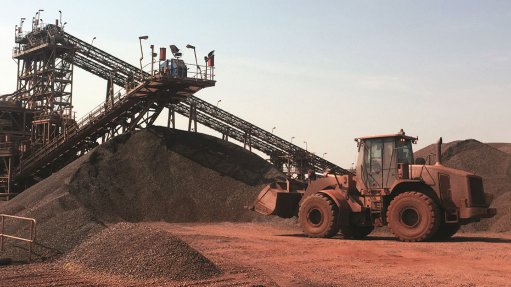
Magnetite dump project unhindered by Palabora sale
 
16th September 2011
TEXT SIZE
Text Smaller Disabled Text Bigger
 

The decision of mining majors Rio Tinto and Anglo American to dispose of Palabora Mining is not hindering the building of a pilot plant to convert stockpiled magnetite fines at the operation into metallic iron.

The project is already under way to create future value at Palabora, where Rio Tinto operates a copper mine, smelter and refinery.

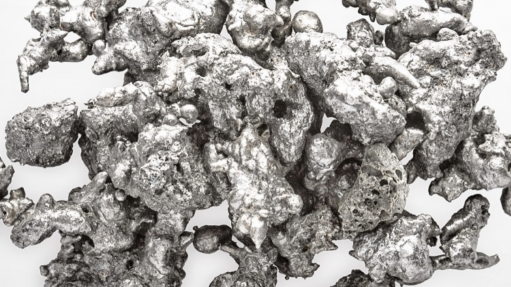
The plan is to process and beneficiate the magnetite into cold-briquetted metallic iron for electric arc steelmaking.

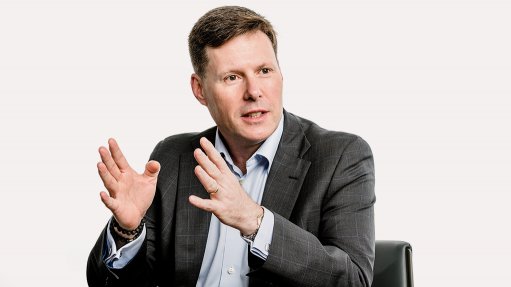
“We’re on site at the moment and the project is going ahead as we envisaged,” Iron Mineral Beneficiation Services (IMBS) CEO John Beachy Head tells Mining Weekly.

South Africa’s State-owned Industrial Development Corporation (IDC) holds shares in IMBS, which plans to grow the initial R120-million 50 000 t/y pilot plant in modules to 500 000 t/y.

The technology to produce the cold- briquetted metallic iron has been licensed to International Iron Beneficiation Group (IIBG), which will deploy it globally and pay royalties to IMBS.

IMBS intends operating the iron-making plants with IIBG, a subsidiary of Russian steelmaker OAO Severstal.

The two companies are currently also conducting a prefeasibility study into the construction of a two-million-ton-a-year iron plant at Sept-Iles, in Quebec, Canada, where there is access to hydropower at 4c/kWh and where there is a nearby iron-ore export port into the heart of the US steelmaking region.

The development of the Canadian plant is programmed one year behind the Palabora plant, which has access to 240-million tons of 58%-iron magnetite on surface, which has arisen from decades of mining activity at Palabora Mining (see also Mining Weekly of October 8, 2010, and video).

Rio Tinto decided to sell its 57.7% share- holding in Palabora owing to the “limited opportunity to expand copper mining”, and Anglo American, which owns a 16.8% interest, said Palabora’s flagship operation was no longer of sufficient scale to fit its investment criteria.

While a steel plant with a conventional blast furnace costs some $1.5-billion per million tons to build, Beachy Head says that it is economically viable to build an electric arc furnace of 50 000 t/y.

Although electric arc steelmaking is in a growth phase, the ferrous scrap it needs is in undersupply, which IMBS technology is tailored to remedy through the provision of the metallic iron from the magnetite.

IMBS intends accessing other substantial volumes of iron-oxide fines that are stockpiled around the world – as at Palabora – the volumes of which are increasing at a rate of 5% to 12% a year.

“There’s no technology that we have come across at this stage that can process without agglomeration,” says Beachy Head, whose company base is Thermopower Process Technology, in Olifantsfontein, north of Johannesburg.

IMBS’s process does not require the use of expensive coking coal and is able to make do with far cheaper thermal coal.

The prototype pilot plant being built at Palabora is expected to confirm that the process self-generates sufficient energy to run the total process.

The briquettes can also replace scrap used in blast furnaces, which represents another market.

Metallic iron’s bulk density is 4.4 g/cm3, compared with only 1.8 g/cm3 for iron-ore, and 93% of the metallic product is iron, compared with only 63% for iron-ore at the same shipping cost.

Fundamentally, 1.5 times more metallic iron can be moved, with the worth of that iron 3.5 times the value of iron carried in ore and with it taking up only 40% of the space required on ships for the transport of iron-ore.

“Electric steelmaking is the preferred option; availability of scrap is the dictator,” says Beachy Head.

Although iron-ore is selling at $180/t and scrap at $430/t, overall iron-making costs from iron-ore exceed those from scrap.

IMBS hopes to be producing one-million tons of metallic iron in South Africa in five years, with a plan for another million tons.

“From the South African perspective, once we have a lot of metallic iron available, the country can base an entire steel industry on it.

“We can create massive employment downstream from that and, instead of selling iron-ore, we can sell a highly valu- able product.

Effectively, if we produced the equivalent of the 35-million tons of iron-ore being produced a year in South Africa as metallic iron, it would change the face of what we do,” he adds.

Edited by: Martin Zhuwakinyu

To subscribe to Mining Weekly's print magazine email subscriptions@creamermedia.co.za or buy now.

Subscribe Now Login


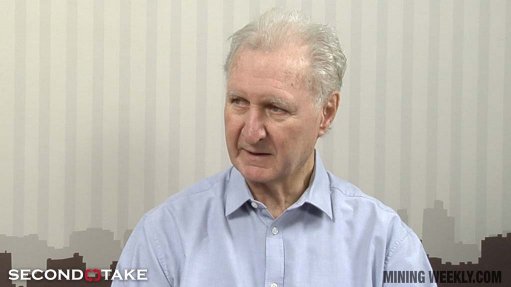
IMBS CEO John Beacy Head on proposed new metallic iron projects in South Africa and Canada.
This video is licensed under a Creative Commons License
GET SELECTED VIDEO
Embed
Selected Video Download (37.94mb)