GOLD 1251.34 $/ozChange: 5.70
PLATINUM 1554.50 $/ozChange: 22.50
R/$ exchange 7.25Change: 0.05
R/€ exchange 9.29Change: 0.05
 
We have detected that the browser you are using is no longer supported. As a result, some content may not display correctly.
We suggest that you upgrade to the latest version of any of the following browsers:
         
close notification
powered by
Advanced Search


Home
 
World News
 
Africa
 
 
Mechanised mining
Is mechanisation of SA's narrow-reef mines a pipe dream or probability?
0 COMMENTS  |  
ADD A COMMENT PRINT
 
 
26th September 2008
TEXT SIZE
Text Smaller Disabled Text Bigger
 
JOHANNESBURG (miningweekly.com) - Mechanised mining of South Africa’s tabular narrow-reef mineral deposits has been on the to-do list of mining majors for years, but whether or not it can be effectively achieved in deep-level mining is a moot point.

Diversified miner Xstrata has indicated that mechanising certain narrow stopes is inadvisable.

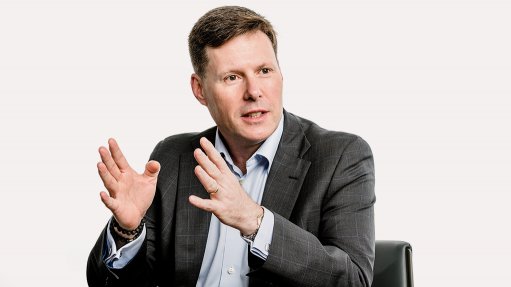
Xstrata CEO Mick Davis tells Mining Weekly that “some reserves just don’t lend themselves to mechanised mining, given the way the geology is laid down”, and “the only way you can extract the ore economically is by more conventional mining”.

Yet mechanised mining con- tinues to be a Holy Grail that is seen to have the desired potential of enhancing both safety and productivity, especially for narrow-reef mining, which has for long been the preserve of mineworkers using hand-held drills.

One thing the chrome- and plati- num-miners have learnt is that mechanised solutions to their particular needs cannot, in the vast majority of applications, be found in glossy sales literature.

Because of the uniqueness of South African tabular narrow-reef mineral deposits, ready-made solutions were unavailable from suppliers from both inside or outside South Africa, which resulted in the mining industry entering into ventures with equipment manufacturers to jointly develop suitable machines that would meet specific needs.

In instances in which narrow-reef mechanisation has been zealously pursued holus-bolus, excessive dilution has caused the perpetrators to apply the brakes.

Where mechanisation does succeed, however, is where the reef is wide, the situations in both South Deep gold mine, in Gauteng, and Target gold mine, in the Free State, proving this point.

Gold Fields used conventional mining until it ran out of narrow Ventersburg Contact Reef, but today the remaining 50-year-life South Deep is a fully mechanised operation, the change necessitating the voluntary retrenchment of 1 700 employees at a cost of R70-million.

The move to mechanisation at South Deep is driven as much by a determination to make mining safer as it is by the need to be optimally productive.

Outgoing Gold Fields COO Terence Goodlace describes safety as “an absolute imperative, which has to come first, and we are putting our money where our mouth is”. But without wide reef, mechanisation is unlikely to have been an immediate option.

It is not that majors are baulking at the potential cost of mechanisation, but rather at the monumental challenge of implementing it in dipping narrow stopes.

SMC strategic project manager Rodney Pickering says: “When you build a mine, capital equipment is peanuts compared with the whole investment put into the mine.”

Citing South Deep as an example, Pickering points to the high capital cost of sinking the 3-km-deep South Deep shaft over an extended period.

He sees the cost of buying load-haul dumpers (LHDs) and trucks required for mechanisation paling into insignificance when compared with the high capital cost of sinking such a deep shaft.

Gold-miner Great Basin Gold’s Burnstone project is introduc-ing a special form of mechanised mining that is expected to yield an additional million ounces of gold through mechanisation of the narrow South Rand reef.

The Toronto- and Johannes-burg-listed Great Basin foresees an outcome of both enhanced safety and improved productivity.

While initial capital layout will be higher, Great Basin calculates that the cost for each ounce will be lower and that more gold will be extracted from every ton of ore mined.

Part mechanisation in various forms has been introduced in some mines, but with mixed success.

There is an absence of any universal narrow-reef panacea.

The concept remains a challenge in narrow reef and there are many risks involved in undertaking this method despite its numerous benefits, and there is hesitancy to change over from traditional mining, with challenges presented even in the technology required for this mining method.

A Growing Trend

Despite this, there continues to be an overriding desire for mecha-nisation, with feasibility studies invariably beginning with mechanised mining on the agenda.

“There is a huge drive for expan- sions and new projects to go the mechanised route before they go conventional,” says SMC business development manager Andrew Main.

“The trend is definitely on the increase,” says Swedish equipment manufacturer Atlas Copco Construction Mining Technique global strategic customers senior project manager Don Thompson, adding that in the gold industry, there is investment being made into the possibility of going the mechanisation route, underpinned predominantly by safety.

“The rest of the world does not have low tabular orebodies, which indicates why the level of mechanisation is higher internationally. It’s the nature of the orebody that determines it,” says Thompson.

In terms of gold-mining, Pickering says, “The major thing we have done is created technology that suits the environment in terms of the height that people have to operate in. “Classically, if you look at gold-mining, operations take place in 1,1 m to 1,2 m and one requires at least that space to get people to work in.”
The issue, however, is not the height of the machines, but more the depths, dips and support requirements.

Dips at greater than 20˚ preclude the use of mechanised trackless methods as there is a tendency for equipment to slide down the slopes.

“Hence, you need an alternative solution,” says Pickering.

Because of the preponderance of conventional mining, mines are generally without the necessary workshops and ventilation required for trackless mining.

Understandably, neither top management nor workers are overly attuned to mechanisation, despite the universal demand for safety and productivity keeping mechanisation on the agenda.

“Considering the safety records that the gold industry is experiencing, there will be opportunities in mechanisation, but it will not be an easy process,” says Main.

The Culture of Mining

Some suppliers detect an appre- hension to mechanise: “The single biggest challenge is asking people to do something in which they have no experience. It’s more about culture and attitude, and people’s experience and their comfort levels; what mechanisation is going to do is change the face of the mining industry,” says Pickering.

Council for Scientific and Industrial Research (CSIR) mining research head Dr Declan Vogt tells Mining Weekly that some lack the conviction that mechanisation will prove more productive than conventional mining.

Vogt is looking into electric rock breaking in gold-mining that is able to mine reef as narrow as 0,5 m

A geological consultancy firm has indicated that there is 22 000 t of gold in Witwatersrand reef a mere half-metre high.

“While this gold can be accessed from existing shaft systems, we require a different technology,” says Vogt.

A breakthrough is needed on how rock can be broken as well as a method of mining low stoping heights.

Human Resources

The lack of a mechanisation culture means that there is a skills shortfall.

This has prompted SMC to open a training academy, producing some 300 artisans to assist customers and ensure productivity and efficiencies.

Lack of skills is also underpin-ned by skilled individuals leaving the country, and Thompson says that Atlas Copco, together with mining companies, has invested significant amounts in human resource development.

Anglo Platinum has two mechanised training centres, one at Waterval to cater for the western limb and the other for the eastern limb operations. These training centres will have trackless mobile equipment simulators and provide theoretical as well as practical training for employees, including management, supervisors and operators.

Will mechanisation’s lower labour intensity create job loss?

Thompson says that the loss of jobs will not be to the extent that people think it will be. “There is a lot of training required, and we will see the redeployment of people into a more skilled practice and safer environment,” he adds.

“If we deliver on fundamental requirements of a safer and cost-effective mining method, we will have more mines. Currently, with fatality rates, mines are closed for a short period, and this has a huge financial impact and loss in productivity that cannot be regained. The emphasis going forward has to be [on being] cost effective and safe,” says Pickering.

“Why would anyone want to work in an industry with a dangerous reputation? We need to start attracting people going forward,” he says.

Extra Low Profile

Atlas Copco is currently working in collaboration with Anglo Platinum to test its extra-low profile (XLP) range of equipment which includes a face drill, the roof bolter and the dozer. The test started a month ago, with face drilling already under test, and the roof bolter and the dozer to start testing shortly.

Atlas Copco URE business line manager Vince Tyler says that until the equipment is proven, mechanised mining will not happen at the scale that it should.

Tyler sees XLP equipment as presenting the the most significant opportunity for mechanised mining of narrow tabular deposits.

But what of health risks to workers in narrow stopes and the ergonomics of ultra-low profile equipment?

The CSIR is researching the possible occupational health hazards that excessive diesel particulate matter can have on workers when emitted in narrow-reef environments, as well as the ergonomics of drivers’ cabins.

“We are looking at the whole picture and making sure that there are no health effects. I think machines take people out of dangerous areas, but there are some risks associated with machines in their entirety,” says Vogt.

Mechanised Future

Cave mining has spawned its own mechanisation response, as is in evidence in mines like De Beers’ Finsch diamond mine, in the Northern Cape, and Rio Tinto’s Palabora copper mine, in Limpopo province.

Big openpit mines in Australia, South America, South Africa, Russia and Botswana are going the cave mining route as they advance underground.

“People are looking at turning these mines into rock factories with high levels of mechanisation and automation,” says Pickering.

Main points out that mechanisation is mandatory in First World countries, and First World companies entering Third World countries are enforcing issues of cost effectiveness and safety.

SMC, which is investing in automation research and development, forecasts that mechani- sation will be as widespread in the next ten years as conventional mining is today.

Edited by: Creamer Media Reporter


Hide Comments  
 
This article contains no Comments


All comments must be approved by our editors, click here to read the editorial guidelines for comments. Please allow some time for our editors to approve your comment after posting.
 * Required Fields

image
image
 *


image
image
 *
 

image
image
 

Verification Image

image
image
 * Please enter the text you see in the above image.