GOLD 1567.00 $/ozChange: 23.35
PLATINUM 1425.70 $/ozChange: 10.70
R/$ exchange 8.36Change: -0.02
R/€ exchange 10.51Change: 0.06
 
We have detected that the browser you are using is no longer supported. As a result, some content may not display correctly.
We suggest that you upgrade to the latest version of any of the following browsers:
         
close notification
powered by
Advanced Search


Home
 
Multimedia


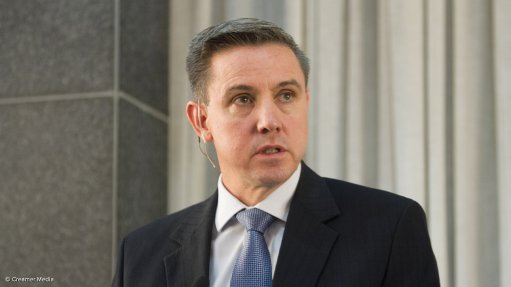
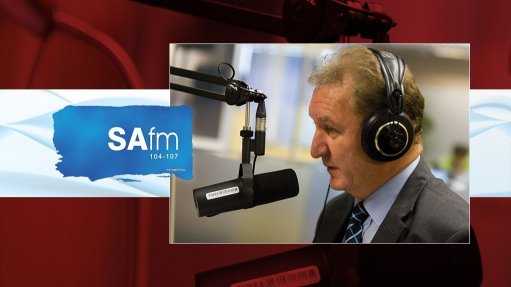
Andrew Main talking about mechanisation in African mining.
GET SELECTED AUDIOCLIP
Embed
This article's audio Download (1.91mb)
 
DIRTY WORK
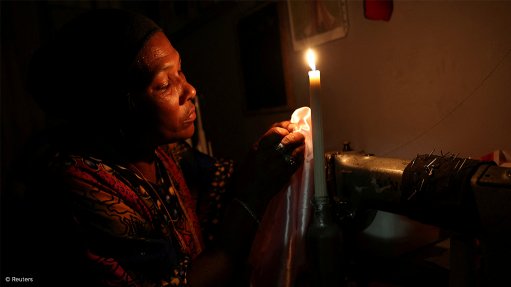
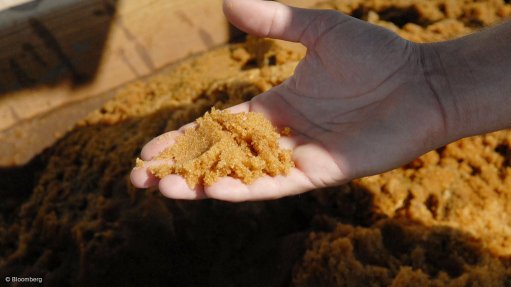
People cannot be expected to work under these conditions for much longer (Bloomberg)
 
DIRTY WORK People cannot be expected to work under these conditions for much longer (Bloomberg)


Is mechanisation in African hard-rock mining the way to go?
 
7th November 2008
TEXT SIZE
Text Smaller Disabled Text Bigger
 

The drive for mechanisation throughout the global mining industry has gained further impetus in Africa on the back of mining equipment supplier Sandvik Mining & Construction focusing considerable attention on the hard-rock mining sector.

“The drive for mechanisation is generic throughout commodities,” says Sandvik GM for business development Andrew Main. “It has come about because there is a need for change from conventional mining methods. It is becoming a logistical nightmare to send thousands of people underground everyday, being exposed to all sorts of safety risks, and, on top of this, there is always the need to produce more quality ore in a more cost-effective manner.”

Main also mentions the issue of HIV/Aids, an ailment that decimates a large number of the 25-year-old to 39-year-old work force. He says that if the affected workers are not absent owing to the illness, they are rendered unproductive when at work.

He says that many consulting engineers performing feasibility studies on new projects are quick to recommend mechanisation wherever possible, indicating the widespread acceptance of the movement. However, slow movers remain in the form of traditional mining operations that either cannot mechanise without a costly redesign of the entire mine, or simply prefer the traditional methods.

Job Security and Skills

A common issue that is raised when discussing automation and mechanisation in industry is job losses for those who used to perform the job manually.

Main explains that through mechanisation, rather than people losing jobs, employees will be upskilled significantly, rendering them highly employable in future. Owing to the skilled nature of the job, better wages can be justified, and working conditions can also be improved as machines can do the ‘dirty work’.

Skills transfer has been placed high on Sandvik’s list of operating priorities at its African business units. A budget in excess of R25-million has been earmarked for the company’s apprenticeship programme for 2008.

A survey shows that 81% of companies in South Africa experience difficulties in recruit- ing suitably trained staff, owing to a shortage of skills, a situation no less serious in other parts of Africa, or elsewhere in the world.

“The growth of mechanised mining in Africa, in line with global trends, is creating many more job opportunities for artisans, who are needed to support equipment in the field. Sandvik, for example, expects to employ in excess of 2 000 skilled and semi-skilled technical men and women by 2010, and there is just no way, with the current skills shortage, that these additional people will be recruited solely from outside the company.

“This is not a company issue – it is a national issue, and Sandvik has to play a role in tackling this skills crisis. One of our biggest challenges going forward to 2010 will be to close this skills gap,” says Sandvik after-market director for Africa Adrian Smith.

The availability of training facilities is one of the constraints in the upskilling process. Another innovation by Sandvik is the establishment of a mobile training unit, which offers refresher training programmes to artisans posted at outlying or remote customer mines, where it would be difficult to withdraw them for any period to undergo training at branches.

Capital Costs Vs Operational Costs

In terms of initial capital expenditure, mechanised solutions may appear expensive on the balance sheet, says Main, but productivity-wise, the machines are far superior and more cost-effective than human labourers, earning back the capital outlay over time.

Further, Main argues that the cost of electricity, which is expected to rise significantly again in 2009, is another mitigating factor in favour of mechanisation. “If one works out the kilowatts used for every ton of ore produced, one would find that the mechanisation is about five times more efficient,” he says.

This information may seem incorrect at a glance, as the mech- anisation itself relies heavily on electricity to function. However, Main points out that human labourers also consume much electricity in the form of compressed air for drills, lighting, ventilation, and so on, which more or less equals the electricity consumption of the produc- tive machines.

It is the superior efficiency of the machines during operation, however, that settles the debate. “An XLP rig can drill a two-metre hole in half the time that a human-operated jackhammer can drill a one- metre hole,” says Main.

Main says that a considerable challenge in selling mechanisation to mining interests is the tendency for feasibility studies to focus on net present value. “Conventional mining tactics are definitely the cheaper option for starting up a mine. However, return on capital spent on machines is realised a lot sooner owing to quicker advance rates and high productivity,” he explains. “The decision to mechanise often depends on whether the company is capital sensitive, or operational sensitive.”

Sandvik’s AutoMine system, launched in 2000, was the world’s first commercial mine automation offering, which holds significant cost and safety implications for companies contemplating, or already engaged in, large-scale underground mining.

Edited by: Shannon de Ryhove