GOLD 1572.45 $/ozChange: 28.80
PLATINUM 1433.50 $/ozChange: 18.50
R/$ exchange 8.33Change: 0.02
R/€ exchange 10.49Change: 0.07
 
We have detected that the browser you are using is no longer supported. As a result, some content may not display correctly.
We suggest that you upgrade to the latest version of any of the following browsers:
         
close notification
powered by
Advanced Search


Home
 
Magazine
 
Weekly Features
 
 
Implementation of mining legislation a concern
 
3rd February 2012
TEXT SIZE
Text Smaller Disabled Text Bigger
 

Although South Africa’s mining legislation is among the most highly regarded on the continent, regulatory overlap needs to be dealt with to increase investment in the sector, law firm Eversheds head of mining Debbie Ntombela tells Mining Weekly.

She explains that overlaps that delay the start of mining operations are the regulatory processes of three government departments, namely the Department of Mineral Resources (DMR), the Department of Environmental Affairs (DEA) and the Department of Water Affairs (DWA).

Further, she says applying for a mining right, a water use licence and environmental authorisation is both time- consuming and costly.

“Upon the successful application for a mining right, which takes one year, the holder of a mining right should go through the departments of Water Affairs and Environmental Affairs for a water use licence and envi- ronmental authorisation respectively. It can take up to two years or more to get such approvals, while each application costs not less than R500 000.”

It would be difficult for a mining company to apply for these licences while simultaneously applying for a mining right that is not a given as the Minister can refuse the granting of a mining right should require- ments not be met. Once the mining company acquires a mining right, only then can an application for a water use licence and environmental authorisation be applied for.

The Mineral and Petroleum Resources Development Act (MPRDA) provides that once a mining right becomes effective, the holder should start with mining activities within 12 months. The National Water Act as well as the National Environmental Management Act provides that the holder of a mining right cannot conduct mining activities without a water use licence and environmental authorisation respectively. It makes it impossible for the mining company to meet the terms and conditions of a mining right within 12 months since the acquisition of these licences takes two to three years.

For instance, this makes it impossible for the mining com- pany to implement the provisions of the Mining Charter (Social and Labour Plan) and the creation of much-needed jobs is delayed.

To acquire a mining licence according to Canadian mining legislation takes a few days; however, the mining company cannot start with mining operations without environmental authorisation, which takes one year to be approved.

“There is a need for a one-stop-shop department for the acquisition of regulatory approvals to enable the mining industry to conduct its mining business efficiently,” says Ntombela.

However, the DMR is cur- rently busy with the amendments to the MPRDA, and extensive consultation is taking place with the stakeholders, including communities who are always detrimentally affected by mining activities.

“The amendments should be tabled before Parliament this year and we hope the above challenges will be addressed, with one department dealing with these licence approvals,” says Ntombela.

Another major challenge in the country is access to infrastructure such as rail and ports, with the red tape involved in accessing this resource making it nigh impossible.

Currently, finance institutions require the regulatory approvals as well as contracts from major State-owned companies such as Eskom and Transnet before approving funding.

“If these problems could be addressed, investment into South Africa will increase significantly.”

Although the African National Congress (ANC) is busy investigating the possibilities of local beneficiation, it is imperative for the relevant government departments to vigorously address this issue, says Ntombela.

“The DMR, through the MPRDA, has put the process in place as stipulated in Section 26 of the MPRDA.

“If the Minister finds that a particular mineral can be bene- ficiated economically in the Republic, the Minister may promote such beneficiation subject to such terms and conditions as the Minster may determine,” explains Ntombela.

Further, she believes that local beneficiation will create more jobs, therefore benefiting the country economically.

“The exportation of mineral raw materials to other countries is the exportation of jobs, which are much needed in our country,” concludes Ntombela.

Edited by: Tracy Hancock

To subscribe to Mining Weekly's print magazine email subscriptions@creamermedia.co.za or buy now.

Subscribe Now Login


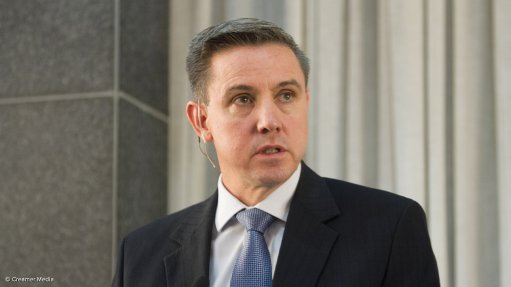
DEBBIE NTOMBELA The introduction of domestic beneficiation will create more jobs
 

DEBBIE NTOMBELA The introduction of domestic beneficiation will create more jobs