A health and safety project from private-sector employer organisa- tion the Chamber of Mines (CoM), called the Mining Industry Occupational Health and Safety Learning Hub, encourages top health and safety performers in the South African industry to share their leading practices with other mining companies.
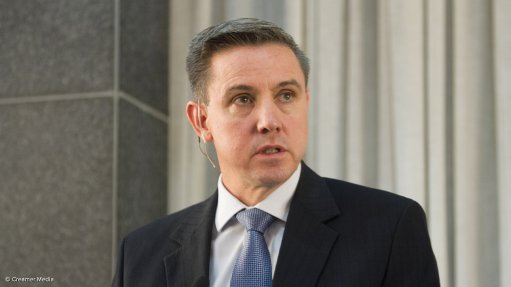
“This project, which is run with other stakeholders, is the largest that the CoM has undertaken in the last decade. Its aim is to have mining companies learn from pockets of excellence in the industry,” says CoM safety and sustainable development adviser Sietse van der Woude.
The CoM believes that the project could make a significant difference in the industry. Van der Woude says that its analysis has showed that, if all companies were performing as well as the best ones in their respective commodity segments, the mining industry would be about 50% safer than it is today.
Three teams of highly skilled and experienced individuals have been established to focus on falls of ground, noise and dust, while another team is being established to focus on transport and machinery. Full-time employees are being appointed to provide support to the three teams, he notes.
Each team is run by two full-time professionals who visit the top-performing mining companies in the country to identify what their leading practices are and then carefully document these. They will then demonstrate the leading practice in another mine to ensure that it was documented correctly. The leading practice is then promoted for adoption throughout the industry.
There will also be an adoption guide to help each mine with the adoption process. A community of practice for adoption (Copa) group, composed of representatives from each company wanting to adopt a particular leading practice, will also be established as a support group for these companies, says Van der Woude.
He believes that the key element in the adoption of these leading practices is to focus on the “people issues”, including the involvement of workers and taking their concerns into account. He says that it is also necessary for all levels of management to adopt and support the leading practice.
The project is reportedly progressing steadily as more people start to understand what the system is about and how to make it work successfully. The pilot phase is complete and the systems involved have been developed. The project should be fully operational by the end of the year.
Industrywide Training Initiative
Meanwhile, Van der Woude says that underground mineworkers are exposed to complex risks in a dynamic environment, which is challenging to manage, parti- cularly when workers have low levels of education. This is a gap in health and safety training that has been identified by the CoM and other stakeholders. Through the tripartite Mine Health and Safety Council, it is investigating innovative training techniques, such as the use of three-dimensional simulations, which have been successfully used by other industries and countries.
Once its investigations are complete, it plans to train 40 000 health and safety representatives from the mining industry. The intention is for one representative from each team in the mining companies to be properly trained and for them to assist in the training and assessment of other employees. This challenging project is scheduled for completion in 2013.
Changing Minds, Changing Mines
The CoM is also participating in the Changing Minds, Changing Mines initiative of the Mine Health and Safety Council to strengthen the mining industry’s culture of safety and health. The Mine Health and Safety Council is a tripartite body composed of industry, labour and government.
Mining Weekly previously reported that the idea behind this initiative was for the companies involved to examine what each was doing with regard to leadership and safety cultures, and then benchmark each one against the framework, work performance and standards from the initiative.
Van der Woude reports that the initiative is making good progress. In February, a multistakeholder conference was held in Nelspruit, where about 120 people repre-sented all levels, from management to workers. Issues such as dignity, mutual respect and racism were discussed, as well as how they impact on health and safety, relationships in the workplace and the role of health and safety technology in the mines. The results from the conference will inform the culture transformation framework, he says.
“To change the current culture, blame must be removed and there must be more participation, more care, and more mutual learning. This will also be incorporated into the framework,” he says. The CoM hopes that the framework will be completed within the next few months, after which there will be more stakeholder participation to ensure their satisfaction with, and commitment to, the framework. Thereafter, the framework will be implemented.
Van der Woude says that health and safety compliance has unquestionably improved since the introduction of these actions and the Presidential Safety Audit Report. He reports that these initiatives have helped industry and companies to understand what they need to focus on and safety performance has improved by about 30% since the start of these initiatives.
“I believe that the industry is steadily progressing towards a real culture of safety and health. The goal of the industry is very clear. It has to achieve zero injuries and fatalities and it has to do that by focusing the right amount of effort and resources on it. Although it might be difficult in certain cases to achieve compliance, we must not let the environment of poor safety com- pliance influence us – we must influence the environment,” he concludes.