The South African mining industry, which is in decline, compared with the ascendancy of its global peers, has the potential to catalyse growth by way of increasing national output and stimulating industrialisation within a lower carbon framework.
There is also an opportunity to synergise South African mining with mining on the rest of the African continent.
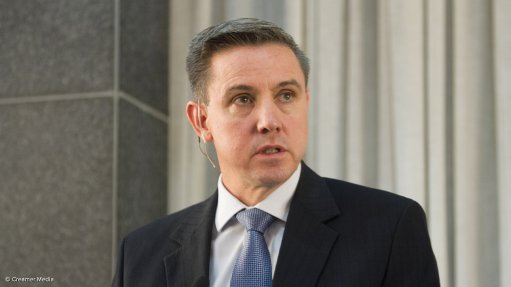
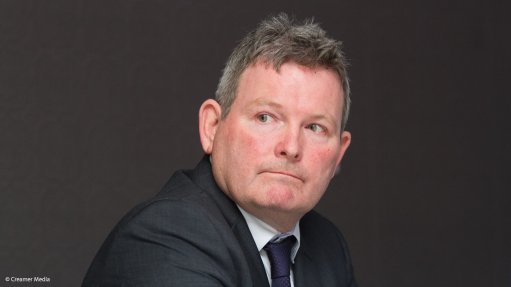
National Planning Minister in The Presidency Trevor Manuel expounded these views at an Investing in African Mining Indaba panel discussion, which was facilitated by the Michael Katz-led law firm ENS and attended by representatives of many embassies and high commissions.
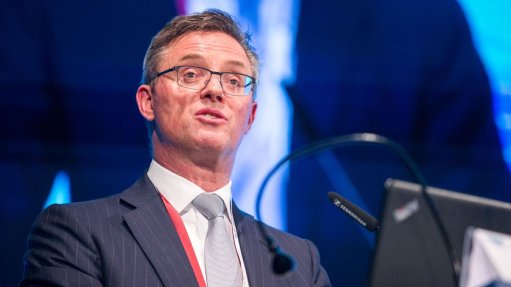
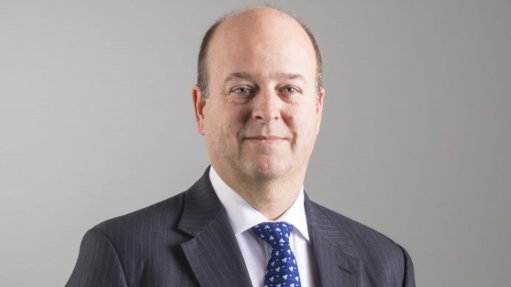
On the panel with Manuel were Rothschild South Africa CEO Martin Kingston, Parliamentary mining unit head Madoda Sambatha, former Water Affairs director-general and national planning commissioner Mike Muller and Identify Partners chairperson Sonja Sebotsa.
Manuel made the point that the mining industry was fundamentally important to South Africa as a platform on which to build a transition to a knowledge economy.
“We need to unlock mining wealth and invest in the people,” said Manuel.
It was critical that South Africa used the mining industry to develop other industries.
A balanced approach was required in the beneficiation of South Africa’s metals and minerals and the realities on the ground.
The country needed to reposition itself as a global and continental provider of mining services, input and expertise, and greater investment, coordination, easier skills migration and more investments in research and development (R&D) were needed, with mineral research organisations like the State-owned Mintek coming into greater focus.
“We need to re-establish South Africa as a centre of excellence in mining technology,” he said.
That required a new approach involving a partnership between public institutions, including educational institutions and mining companies.
The plan that Manuel’s 26-member National Planning Commission (NPC) expects to finalise in May presents a cogent case for raising mining output, increasing value addition and committing the State to supporting infrastructure provision.
Manuel said during the panel discussion that South Africa needed to look again to the minerals sector to be a major part of the plan to generate the financial resources needed to build capability.
The NPC is planning to use South Africa’s mineral resources for the common good, with the State providing supporting infrastructure and building the linkages to promote employment through economic growth.
On foreign direct investment (FDI) being in decline, Kingston told the meeting that predictability of the investment environment was a prerequisite for companies to expend significant sums of capital.
Mines took years to reach production, sometimes between five and eight years, with return on investment taking even longer.
While the mining sector was characterised by long investment lead times, mining analysts were fixated on quarterly results, which Manuel saw as the antithesis of development and expressed the view that investment choices might be very different if the long-term reality of mining was accepted.
Sebotsa said failure to provide supporting infrastructure had led to South Africa’s failure to optimise its position in mining.
“There’s a lot we have to catch up on, but also a lot of potential that comes with that,” she said.
Muller said that the numbers proved that South Africa had not done as well as it should have and put that down to the country’s complex regulatory framework and complex institutions, which discouraged investment.
He added that the country needed to make its regulatory systems work well in practice.
Sambatha said that mining companies used labour and policy issues as scapegoats for their own poor performance.
Rather than exploiting South Africa’s competitive edge to the full, the industry had become obsessed with the failures of its social partners.
The only solution was a dialogue that sought to end the blame game between labour, government, business and investors.
Kingston said that the country had already missed two boats and the third boat was already setting sail.
In response to South Africa’s missed opportunities, Manuel said a good depiction of the resources market was the continuous rotating wheel of the giant London Eye, which turned continuously and gave access continually.
“You might not be in the one cabin but there’s going to be a next cabin,” he said.
While the demand for South Africa’s resources fluctuated, South African mining companies should look to adding a new dimension to its participation in markets through engaging in R&D to give itself continuous demand potential through linkages to locally developed product offerings which would also have service spin-offs.
South Africa needed R&D that turned the country into a resources participant with a difference.
“It takes a different head to drive the changes and that’s why Mintek and other R&D areas are going to be fundamentally important to create the change,” Manuel said.
Kingston identified the lack of effective partnership between the private sector, the State and labour as a stumbling block, which he saw as undermining South Africa’s ability to make any real progress.
He said predictability, certainty and reliability had to span the full regulatory, infrastructural and workforce spectrum.
“I don’t think it does the country any good when, on the eve of the Indaba, we see literally tens of thousands of miners being laid off because of strike action. That acts as a disincentive to FDI,” he added.
Until business, government and labour succeeded in working hand-in-glove with one another, he did not believe that South Africa would be able to achieve the minerals potential that it theoretically had.
“Until such time as we can have consistent, transparent and reliable information and data, on which everybody can base their judgements, we’re going to continue to have a debate in a way that is not helpful,” Kingston said.
While South Africa was fortunate to have ended up on the periphery of the 2008 global economic meltdown, the country was now at the centre of the new highly unpredictable and volatile economic and political storm that was impacting on the globe.
The Linkages
Manuel expressed the view that the positioning of the mining sector had to start from the premise of both backward and forward linkages being propagated.
It was also necessary to understand that nothing was delivered through merely having mineral resources beneath the surface.
He expressed the belief that South Africa needed to look at the needs of its dynamic mining sector through new eyes.
For example, it was no longer an option to undertake mining in seismically difficult deep-level mining arenas using unskilled people.
The Mapungubwe legacy showed that mining had been crucial to the South African region for thousands of years before the discovery of gold on the Witwatersrand in 1886 and enabled South Africans to recognise that what was taking place in the current milieu in South African mining was out of character with the long trajectory of mining’s centuries-old centrality.
Mining had left a high watermark in the 1970s, when it contributed 21% of South African gross domestic product (GDP) and employed 660 000 people.
However, in the 1990s, mining shrunk to a new low and, 20 years later, its contribution to South African GDP was down at 6% and the employment complement down to 440 000.
From making a R103-billion contribution in 1993, it made only R93-billion in 2009, despite the global commodities boom.
South Africa’s challenge was to reverse the downward trend and those statistics presented the NPC with an understanding of the decisions South Africa needed to take to create a sustainable future mining industry and also to position mining as the catalyst to drive other changes in the economy.
South Africa had to set in place the proper planning that would have the effect of boosting investment and employment in a mining industry that was underpinned by policy and regulatory certainty.
G
overnment would extract rents from the sector in taxes without springing surprises, invest in infrastructure to support mining, build linkages to increase value-add jobs and nudge the sector to lower carbon emission.
“The centrality of mining in South Africa is something that we must recognise very, very strongly,” Manuel reiterated.
Plans to rectify government failure to put in place the requisite water, rail and electricity infrastructure needed for much higher mining output were well advanced and, in some instances, under implementation.
With such infrastructure in place, there was no reason why mining output could not double in the decade to support a 7% annual economic growth rate.
Infrastructure Tariffs
The pricing policies for key infrastructure had been suboptimal and prices had not reflected the cost of maintaining infrastructure and expanding it in time.
The proposed development plan dealt with infrastructure needed for platinum and coal and detailed recommendations for the iron-ore and coal lines, port infrastructure and the energy needs had been made.
“We fervently believe that the country is capable of reaching much higher levels of output in mining and we must see each other as partners as we go forward,” Manuel added.
The NPC had drawn from the economic growth and development work of Professor Michael Spence on countries that had continuously grown by more than 5% a year for 15 years.
Asia’s growth model was premised on countries using their comparative advantage to build a set of institutions and capabilities and to reposition themselves for the future.
South Korea was once a poor agricultural economy that spun into industrialisation using the chaebol platform to move to a knowledge-intensive economy.
Low-cost manufacture, which has been a feature of China in the last 30 years, was now making way for the five-year plan adopted by congress in China in April against the realisation that inflation is going to take root as wage costs increase and domestic consumption rebalances the Chinese economy.
Now South Africa was aiming to become a dynamic knowledge-based economy that provided jobs.
South Africa, Manuel told the Mining Indaba panel, needed to make choices that result in the flow of investment capital into the country and to use domestic capital far more smartly than before.
To subscribe to Mining Weekly's print magazine email subscriptions@creamermedia.co.za or buy now.


.gif)