GOLD 1774.70 $/ozChange: 17.80
PLATINUM 1718.50 $/ozChange: -0.50
R/$ exchange 7.73Change: 0.00
R/€ exchange 10.25Change: -0.01
 
We have detected that the browser you are using is no longer supported. As a result, some content may not display correctly.
We suggest that you upgrade to the latest version of any of the following browsers:
         
close notification
powered by
Advanced Search


Home
 
World News
 
Australasia
 
 
PLATINUM
Govt-enforced safety stoppages lacerate Amplats, Lonmin platinum production
 
26th January 2012
TEXT SIZE
Text Smaller Disabled Text Bigger
 

JOHANNESBURG (miningweekly.com) – Soaring government-enforced safety stoppages at South African platinum mines have lacerated the production performances of mining companies Anglo American Platinum (Amplats) and Lonmin, latest production reports indicate.

Both companies say that they are discussing more appropriate safety mechanisms with the Department of Mineral Resources (DMR) and Lonmin warns that its metal sales and unit costs will continue to be adversely impacted should the current trend of production losses from safety stoppages persist.

Liberum Capital analyst Dominic O’Kane has a “sell” recommendation on Lonmin shares, saying that the company’s 40% revenue rise masks an “industry-wide problem" of enforced safety stoppages.

All South African platinum-group metals (PGMs) miners have flagged exceptionally high 2011 safety stoppages, O'Kane says in a note.

Market face-savers for Amplats were production from the company's new Unki platinum start-up in Zimbabwe, which is one year ahead of schedule; better performance at Mogalakwena, Amplats' lowest-cost mine by far; and smelter reliability, which enabled Amplats to meet its promise of selling 2.6-million ounces of platinum in 2011.

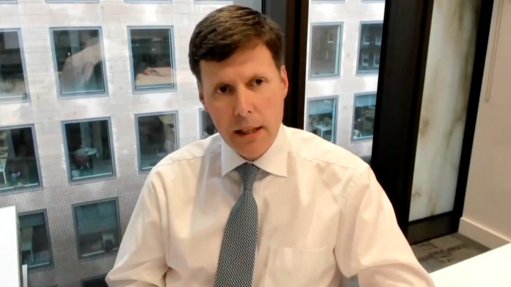
The JSE-listed Amplats, headed by CEO Neville Nicolau, reported a huge 128% increase in fourth-quarter safety stoppages and Lonmin, headed by CEO Ian Farmer, simultaneously reported the “severe impact” of a 177 000 t production loss, compared with prior year period losses of 21 000 t – an eight-fold increase.

The DMR inspectorate imposes the stoppages under Section 54 of the Mines Health & Safety Act, which empowers the suspension and halting of mining operations across a broad operational front, well beyond the area of immediate safety concern.

Amplats reported 32 fourth-quarter stoppages, compared with 14 during the fourth quarter of 2010 and 16 during the third quarter of 2011, bringing the total for 2011 to 81 compared with 36 during 2010 – a 125% increase.

“The time taken to have stoppages lifted has increased from two days to five days,” O’Kane said, adding that unless platinum prices rally, Lonmin’s $2-billion capital expenditure to 2015 would put pressure on its balance sheet, causing the company’s debt to rise.

The increase in Section 54 notices, in Lonmin’s opinion, increases safety risk as a result of operating momentum being interrupted.

“We have highlighted to the DMR the need to work together to establish a more appropriate mechanism that enables safety improvement without increasing the risk to safe and sustainable operations,” Lonmin adds.

Amplats said that it was continuing to engage proactively with both its workforce and the DMR to implement more effective means of addressing safety risks.

Lonmin’s refined platinum production increased 24.3% year-on-year and platinum metal in concentrate 3.5% because of having ore stocks on hand and consistent metallurgical recovery rates.

Amplats’ equivalent refined platinum production – which is mined ounces that are expressed as refined ounces – was down 9% year-on-year and down 13% quarter-on-quarter to 583 000 oz owing to the greater number of safety stoppages.

Offsetting the impact of the stoppages was a 7% head-grade and 4% recovery improvement at Mogalakwena’s north pit, Unki reaching steady state in the December quarter and refined platinum production being up 10% quarter-on-quarter to 710 000 oz.

Even Amplats’ platinum ounces from its pool-and-share arrangement with Aquarius Platinum at Kroondal were 12% lower than in the fourth quarter of 2010, owing primarily to safety stoppages, but also to limited equipment availability and the implementation of more stringent support systems.

Lonmin sold 92 863 oz of platinum and 189 590 oz of total platinum-group metals in the quarter at a 3%-down basket price of $1 136/oz for its PGMs, with the rand basket price 14.4% higher than the prior year period.

Lonmin has achieved its sole funded exploration ‘earn-in’ milestone of $32-million on the Vale joint venture (JV), giving Lonmin the exclusive right to a 50% interest in any PGM deposit on a JV property on which a development decision is made. Vale and Lonmin will jointly fund an agreed 2012 exploration programme on an equal basis, including the Denison openpit feasibility studies.

Lonmin’s sales guidance for its current year to September 30 remains 750 000 oz of platinum.
 

Edited by: Creamer Media Reporter
FULL Access to Mining Weekly and Engineering News - Subscribe Now!
Subscribe Now Login


Hide Comments  
 
Readers Comments
 
image image
I searched your article in vain for information about why the stoppages occurred, but found nothing better than analyst O'Kane's assessment that they were "well beyond the area of immediate safety concern". I am left with the impression that he may hold production and profit above safety. How about an synopsis of the safety policy and the nature of the causes for work stoppage? We readers could then make our own assessment.
image image 
image
Dan Farrow on 27th January 2012
image image
Granted there may be issues with section 54 of the MH&SA and the way that it is implemented but the bottom line is that the mandate still applies. Mine safely or forget about mining!
image image 
image
Geoff L on 27th January 2012
image image
This is a prima facie case for further review of the mining regulatory framework. The MRPDA is laden with ambiguities and counter productive regulations and does not appear to have been put through a rigorous regulatory impact analysis. The government just continues to get it wrong when it comes to the mico stuff.
image image 
image
Miyelani Maluleke on 27th January 2012
image image
This was a totally foreseeable outcome of the shortsighted and retributive government safety policy. Lacking understanding of the issues they are dealing with, the only approach they know is to enforce needless, job destroying, forex limiting sanctions on the operations. As though the production/revenue loss due to the same government short-sighted policies had not already done enough damage. As the song says "When will they ever learn." The African answer to this rhetorical question is of course never.
image image 
image
Lookout on 27th January 2012
 
Neville Nicolau
 
Picture by: Duane Daws
Neville Nicolau
Ian Farmer
 
Picture by: Duane Daws
Ian Farmer
 
Previous Play Next