GOLD 1566.75 $/ozChange: 23.10
PLATINUM 1428.00 $/ozChange: 13.00
R/$ exchange 8.34Change: 0.00
R/€ exchange 10.50Change: 0.06
 
We have detected that the browser you are using is no longer supported. As a result, some content may not display correctly.
We suggest that you upgrade to the latest version of any of the following browsers:
         
close notification
powered by
Advanced Search


Home
 
Breaking News
 
 
COAL
Vele mine rehab to take place concurrently with mining - CoAL
 
23rd August 2010
TEXT SIZE
Text Smaller Disabled Text Bigger
 

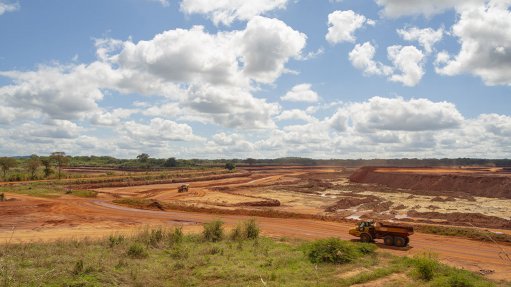
JOHANNESBURG (miningweekly.com) – Mining and rehabilitation will take place concurrently at Coal of Africa's (CoAL's) Vele's opencast coal project where South Africa's Department of Environmental Affairs (DEA) has ordered mining to cease.

The Vele opencast mine, which is 15 km from the border of the Mapungubwe National Park – a Unesco World Heritage site – will have been completely rehabilitated before the underground mine reaches a point 6 km from the park's border, as rehabilitation is planned to take place concurrently with mining.

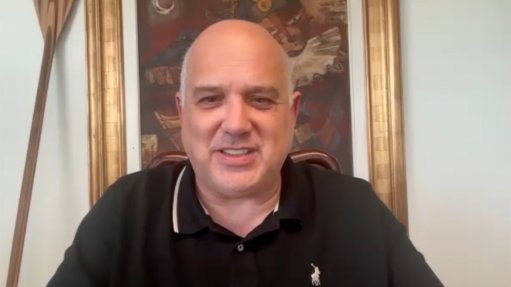
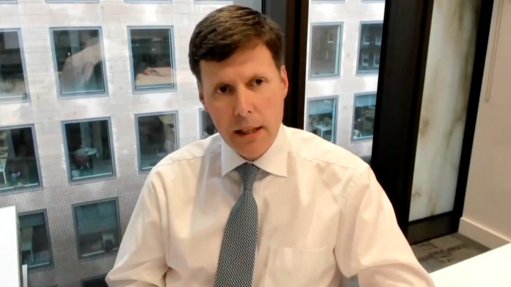
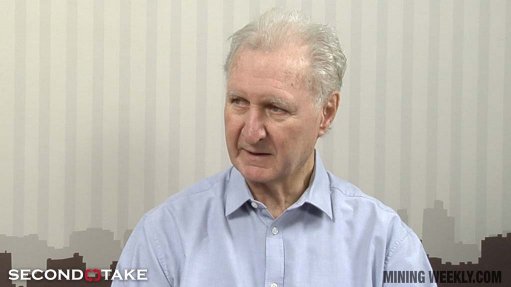
"One of the benefits of this resource is that it's a mine that we're able to rehabilitate as we move along," CEO John Wallington tells Mining Weekly Online in a video interview.

If given the go-ahead, the Vele underground mine will take 30 years to reach the point that is 6 km from the border, which is outside the legislated buffer zone. The border is, in turn, 30 km away from the park's sandstone Mapungubwe hill that was once the citadel of the Iron Age people, which is why Wallington is able to say that visitors to the Mapungubwe National Park will not see or hear the mine.

CoAL has still to decide on its method of underground mining: "We haven't even got the authorisation for the underground mine or the mining rights to mine the underground yet in terms of mining methods.

"We'll probably only use the bord-and-pillar mining method, but if we decide to introduce longwall mining, that will have to be approved and we would then have to mitigate the impact on the surface. But the underground is between five and ten years away, depending on the rate of expansion of the mine," Wallington says.

CoAL has plans to produce five million tons of soft coking coal from Vele for 25 years, and its Makhado project, also in Limpopo province, has the potential to produce another five million tons a year for 20 years, with other assets able to add to that in the future.

Market permitting, CoAL expects to produce at least ten-million tons a year of a high-value product that South Africa does not produce, and which it currently imports.

The world market pays around $200/t for hard coking coal and $150/t for soft coking coal.

At today's prices, Vele would be generating a turnover of $700-million a year and Makhado would be generating $1-billion worth of foreign exchange and export revenue, as coking coal has significantly stronger demand fundamentals than the thermal coal that South Africa exports from Richards Bay.

But before those revenues begin to materialise, R10-billion-plus of capital will need to be ploughed into the mine and into logistics. CoAL has raised R3-billion from shareholders and two-thirds of that has come from offshore.

The soft-coking coal Vele project - in which CoAL has already invested R600-million - has the potential to create thousands of jobs in the poor Limpopo province, without scarring the park, says Wallington.

"If we get to five million tons a year, that has a potential to move to between 2 000 and 3 000 direct jobs and then with the fact that the Vele coal is going to be logistically transferred by rail to the ports, you are going to treble that with all the people required to get all those things done, plus all the other indirect jobs that mining tends to create.

"We also know that 3 000 employees will support probably 30 000 people and 3 000 direct jobs will probably create 10 000 indirect jobs," he tells Mining Weekly Online.

"We've got to show that the Mapungubwe National Park is not going to be affected and hopefully, as the mine succeeds, money can be put into the region, like Venetia has certainly done in the past," he adds.

De Beers' lucrative Venetia diamond mine and Vele are reportedly equidistant from the Mapungubwe National Park.

"Venetia has not scarred Mapungubwe at all, but it has actually helped to create the park, and we can add to what Venetia has done," Wallington adds.

South Africa, like Chile, Canada and Australia, has mining as one of its biggest income earners and biggest employment generators, and Wallington's view is that the 7% a year growth aspiration of South African Finance Minister Pravin Gordhan will be unattainable if Vele-type compliant mine projects are prevented.

Gordhan has repeatedly expressed the belief that it has become opportune for South Africa to proclaim a new "national intent" of pursuing an economic path that targets sustained gross domestic product growth of 7% for a period of 20 years.

"If we're going to prevent this type of mine from even starting, we haven't got a hope in hell of South Africa reaching the 7% economic growth rate that Finance Minister Gordhan is targeting," Wallington says.

He points out that the Australian state of Queensland is one of the richest in the world because it exports 130-million tons a coking coal a year, which is 60% of the world's market.

"Coking coal has made Queensland very wealthy indeed. I see the potential of Makhado and Vele doing the same to the Limpopo province," says Wallington, who mined coal in Queensland for Anglo Coal.

CoAL has an offtake agreement with steelmaker, ArcelorMittal South Africa (AMSA), which owns 16,3% of CoAL. AMSA will purchase the first tons from Vele and Makhado and there will be rail partnerships between the two companies for the life of both mines.

This will benefit both parties as AMSA will not have to import the hard coking coal and will benefit from slightly lower transport costs.

Although South Africa exports about 60-million tons of thermal coal a year, it is an importer of coking coal.

"Coking coal has got fantastic value and very often hard coking coal goes at double the price of thermal coal, and that's the kind of extra value this brings," he says.

"Personally, my view is that Vele will not scar Mapungubwe at all. One of the issues raised is that you have a beautiful area, and I must admit that it's one of the most beautiful parts of South Africa and does need to be protected.

"I guess, the concern is that once you've got one mine there, it's a foot in the door, and there's going to be a massive proliferation of mining that is going to damage the whole area and turn it into a Witbank.

"But my belief is that if every mine is subjected to the same scrutiny that we are being subjected to, there will be full compliance.

"Vele mine is going to be run with extremely tight compliance. Right now, we're intensively involved with the DEA, reinforcing everything that we are going to do.

"Those discussions are going very well and I believe that we'll develop a very good relationship with the DEA and I'm very pleased about that," Wallington says.

He plans to invite all the objecting organisations to take part in the replanting process and all mine activities, "so that they can see that we're actually committed to the highest environmental standards".

Once the Vele mining right was awarded and the environmental management programme approved, the company started mining, but was stopped by the DEA on August 5.

"What I've been doing recently is engaging in quite intense discussions and negotiations with the Department of the Environment itself, because the department wants to see a solution that involves overall benefit for the country," he says.

Discussion is also under way with the Department of Water Affairs for the water right.

"All the technical issues have been resolved to the satisfaction of Water Affairs, for example, there was concern that there was going to be massive acid mine drainage, that's now been shown not to be the case.

"We're going to have monitoring holes and we are inviting Water Affairs to come in and monitor us all the time, to check that there isn't pollution," Wallington adds. The mine is already designed on a zero effluent discharge basis.

Diamond miner De Beers' Venetia diamond mine has been mining the area in Limpopo province for more than 20 years and De Beers helped to establish Venetia park and to sponsor the creation of the Mapungubwe National Park.

There is a good example of coexistence and how mining can actually help conservation meet some of their goals.

Initially, Vele will truck up to one million tons to the siding at Musina, with trucking is seen as a temporary measure, and then railed from Musina to Maputo.

"If and when we get going with the expansion, then we'll be looking at rail requirements, and that will be significant capital expenditure and regulatory approvals will have to be gone through to get the rail, and it will take some time to get," Wallington reports.

CoAL has port allocation from Grindrod at Maputo in Mozambique.

CoAL has selected MCC Contracts, a division of Eqstra, to conduct opencast mining operations at Vele.

Rail allocation has been secured for both coking projects with Transnet Freight Rail for one million tons a year to the Matola dry bulk terminal.

The rail capacity matches the current one million tons a year port allocation for the export of coking coal from both the Vele and Makhado projects. Third party coal has already been railed with success to ensure the practical viability of the rail and port allocation.

The Matola terminal is set to expand by an additional two million tons a year, for which CoAL has secured rights by contributing loan funding. The Vele total in-situ resource is 720-million tons.

The Makhado coal is situated north of Soutpansberg, 60 km from Musina, close to Rio Tinto's Chapudi project. Makhado is located near to the railway line that runs from Musina and to the Richards Bay Coal Terminal. The alternative route, through Mozambique to the port of Maputo, requires an upgrade.

"Even with the best environmental controls, the environmental degradation caused by coal mining, similar to that around Witbank, will kill any hopes of growing tourism, both international and local, to this prime pristine area of Africa," said Mopane Bush Lodge operator Paul Hatty.

The fear is that, if the Vele mine was approved, more coal mines will be established in the area.

"Anglo Coal has already purchased four farms even closer to the national park and heritage site, and three other farms next to the Mapungubwe National Park's entrance show promising signs of exploitable coal," Hatty says.


Edited by: Creamer Media Reporter

To subscribe to Mining Weekly's print magazine email subscriptions@creamermedia.co.za or buy now.

Subscribe Now Login


Coal of Africa CEO John Wallington tells Mining Weekly Online’s Martin Creamer that the plan for the opencast mine is to mine and rehabilitate concurrently. Cameraperson: Nicholas Boyd. Video Editor: Darlene Creamer.
This video is licensed under a Creative Commons License
GET SELECTED VIDEO
Embed
Selected Video Download (4.94mb)