GOLD 1561.40 $/ozChange: 17.75
PLATINUM 1423.70 $/ozChange: 8.70
R/$ exchange 8.38Change: -0.04
R/€ exchange 10.55Change: 0.02
 
We have detected that the browser you are using is no longer supported. As a result, some content may not display correctly.
We suggest that you upgrade to the latest version of any of the following browsers:
         
close notification
powered by
Advanced Search


Home
 
Sector News
 
Mining Services
 
Materials Handling
 
 
Gas transport costs on the rise
 
27th May 2011
TEXT SIZE
Text Smaller Disabled Text Bigger
 

The cost of producing and transporting liquefied gases is expected to escalate significantly in the coming months, owing to a number of interrelated factors, gas producer and supplier Air Products reports.

The industrial gas producing sector is increasingly coming under pressure as a result of rising electricity and transport costs. Transport costs are expected to be hard-hit by a significant increase in State-owned transport utility Transnet’s fuel pipeline levy and the potential introduction of toll tariffs on Gauteng’s freeways.

Air Products on-sites GM Rob Richardson says Transnet’s implementation of a 59,9% increase on its fuel pipeline levy will have a knock-on effect for inland regions, result- ing in more-expensive fuels. Further, a soaring oil price has prompted fuel price increases in recent months.

“In South Africa, liquefied gas is mainly transported by road, and increased fuel prices will lead to increased costs of supplying liquefied gas to indus- tries. The implementation of the South African National Roads Agency Limited’s proposed toll fees on most of Gauteng’s freeway system will further add significant pressure to transporting gas cost-effectively,” he says.

Liquefied gas is usually transported in heavy pressurised metal containers, such as bulk-liquid tankers, and gas cylinders, necessitating careful planning to optimise transport. Richardson says it is often challenging to find a balance between packaging the gas, selecting load sizes and selecting the most appropriate transport routes.

Nevertheless, he notes that large volumes of certain gases are suitable for rail transport over long distances, which results in lower transport costs. These gases include liquefied petroleum gas, propane and ammonia that can be liquefied at ambient temperatures with relative ease by pressurising it.

However, other industrial gases, such as hydrogen, argon and nitrogen, are more chal- lenging to transport over long distances, owing to the need to keep them at significantly low temperatures of about –190 °C. These cryogenic gases require specialised handling equip- ment and procedures, making it challenging to transport them by rail in South Africa.

Richardson believes the size of the market for such gases is far below the levels which would justify Transnet investing in specialised handling equipment and related specialist training. Such gases are rather supplied by road transport either in bulk liquid form or in more-manageable-sized containers, such as mini tanks or cylinders.

Air Products reports it is, however, involved in transporting cryogenic gases by rail in the US and other locations across the globe, where volumes are higher.

Further, increasing costs are generated by State-owned power utility Eskom’s substantial yearly tariff increases, which also have a big impact on the gas-producing industry.

The company reports it is actively dealing with the challenges of improving its production efficiencies and volumes, while reducing its energy consumption to meet Eskom’s demand-side management programme. Richardson says the gas-producing process is energy intensive, with electricity accounting for between 65% and 75% of production costs, making energy efficiency a critical success factor in the business.

The company has responded to the electricity cost increases by refurbishing and upgrading some of its older plants, and is currently evaluating the replacement of some of its older air-separation plants with newer technologies.

Further, Richardson explains that the company’s core on-site business is to supply process gases to primary metals, minerals and chemicals operations and this is generally achieved by establishing air-separation plants at or adjacent to the customer’s premises.

“Customers are looking for a high degree of supply security, which requires air-separa- tion plants to be designed to proven engineering standards, implementing structured plant maintenance programmes and having a backup supply of liquefied gas available should a failure take place,” he says.

The air-separation plant will continuously supply gas to the customer’s operation through a pipeline connection, ensuring a reliable supply of gas, and avoiding the need to transport gas over long distances.

Further, smaller quantities of liquefied gas are also produced at the plants and sold commercially, stimulating a range of other nonrelated downstream businesses.

To manage the demand for gas, minimum stock levels and maximum demand levels must be agreed before entering into a gas supply contract. “Supplying clients with a reliable gas stream from an on-site plant, requires a significant amount of systems inte- gration to effectively monitor the supply and demand dynamics,” Richardson adds.

Meanwhile, he points out that legislation governing the use of pressure vessels in South Africa has recently changed in that it has been brought in line with current European legislation. This results in the country being a step ahead of its neighbouring States in pressure-vessel certification, easing the export of gases.

“South Africa has more stringent requirements for importing gas storage vessels. This results in South African-certified pressure vessels being accepted in neighbouring countries without the need for further certification to be undertaken,” Richardson concludes.

Edited by: Creamer Media Reporter

To subscribe to Mining Weekly's print magazine email subscriptions@creamermedia.co.za or buy now.

Subscribe Now Login
 
 
Topics in this article
Company Industry Term


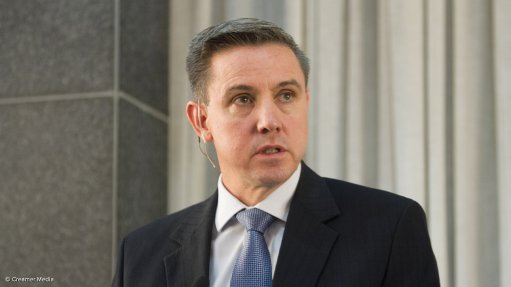
Air Products on-sites manager Rob Richardson discusses the company's on-site business strategy. Cameraperson: Nicholas Boyd. Editing: Darlene Creamer.
This video is licensed under a Creative Commons License
GET SELECTED VIDEO
Embed
Selected Video Download (9.3mb)