JOHANNESBURG (miningweekly.com) – South Africa’s black-controlled diversified mining company Exxaro Resources is putting the Republic of Congo (RoC) on the map as a new African iron-ore development frontier with its R3-billion (A$338-million) cash takeover offer of African Iron.
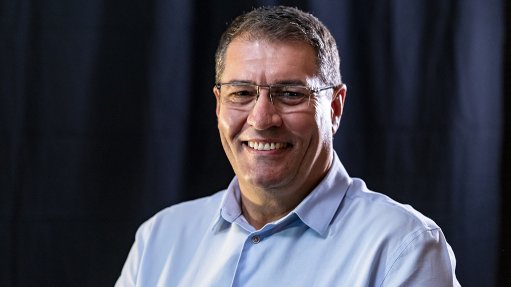
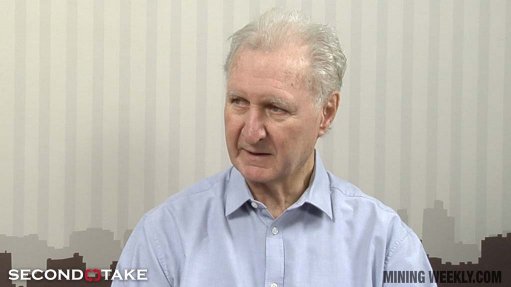
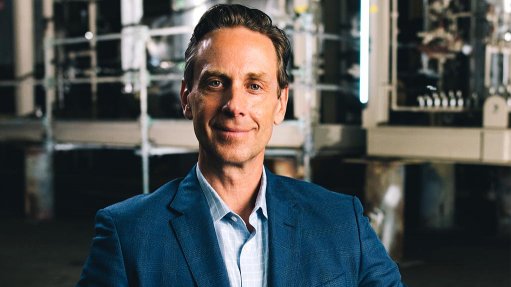
Exxaro CEO Sipho Nkosi said in a media teleconference that the company had been well received by top RoC politicians and that it had also taken advantage of the visit of the RoC president to South Africa for the recent African National Congress centenary celebrations to continue investment discussions, which would be further reinforced when Exxaro visited RoC again in February.
Exxaro finance director Wim de Klerk, who described RoC as an “attractive platform for iron-ore growth”, said that an “appropriate” hurdle rate had been set to take into account both country and associated risk.
Exxaro GM Ernst Venter said that other resources companies, including London-listed mining major Xstrata and ASX-listed junior Equatorial Resources, were also active in the RoC, where there was the potential for large capital investment that would require both central and local government collaboration.
While Exxaro had not held takeover discussions with Equatorial Resources, which owns 20% of African Iron, it had entered into a 19.99% pre-bid share-purchase agreement with African Iron’s largest shareholder, ASX-listed Cape Lambert.
Venter said that the norm in the RoC was for the central government to be given 10% of the shares in a project free of charge as a “free carry”, which had been included in Exxaro’s value calculation.
Xstrata’s Zanaga iron-ore project was situated 350 km from the railway line compared with the 2 km distance of the Mayoko project that Exxaro was bidding to acquire.
The rail line, which Venter described as being “in extremely good condition” apart from a few areas where upgrading would be necessary, was currently used several times a week to transport passengers.
The Pointe-Noire port, though currently a container port, was a deep-water port whose northern aspect was earmarked for development as a bulk terminal.
Venter said that following a thorough due diligence, the Exxaro executive committee was “quite comfortable” doing business in RoC and saw itself as being competitively placed to use existing rail and port infrastructure.
He noted that African Iron’s 120-million ton Mayoko project was RoC's most advanced iron-ore project and that the acquisition would initially bring into the Exxaro portfolio a mere 20% of the total prospect area, which contained iron-ore that outcropped onto the surface, allowing for low-cost openpit mining, probably initially by a contract miner.
Mayoko presented a near-term development opportunity in an emerging iron-ore province that was served by existing nearby logistics infrastructure.
The heavy-haul railway line that the project would use terminated at the port of Pointe-Noire, where African Iron had been granted a bulk-ore allocation at a proposed terminal that would facilitate iron-ore exportation to both European and Eastern destinations from early 2014.
The agreements for use of the State-owned rail and port network were being put in place and five-million tons of the annual rail capacity had already been allocated.
“The willingness of the government to support us as far as infrastructure is concerned has been quite great,” Nkosi said.
Adjoining Mayoko is a nigh thousand square kilometres of the Ngoubou-Ngoubou prospect that also forms part of the deal, which had been preceded by a five-year company study of iron-ore opportunities led by Exxaro’s Brian van Rooyen.
Venter said Exxaro had found the African Iron deal the most favourable of 70 projects that had been screened globally.
JSE-listed Exxaro, a coal and mineral sands miner, already has a 20% interest in the Sishen Iron Ore Company, a subsidiary of the Anglo American-controlled Kumba Iron Ore, which operates the Sishen and Thabazimbi mines in South Africa.
Exxaro has issued bidder statement that outlines its February 14-deadlined offer of A$0.51 cash for each ASX-listed African Iron share, rising to A$0.57 cash if Exxaro gains a 75% interest.
Bank of America Merrill Lynch’s Andrew Snow queried whether the ‘leaking’ of the deal to the media two days ahead of the official announcement had impacted on the efficacy of Exxaro’s due diligence, and quipped that it would be great if “the Australian rugby team’s backline was as ‘leaky’ as the Australian stock market”.
A cause of the two-day official announcement delay, Exxaro said, was that certain shares were held in escrow and the spilling of the beans two days ahead of time was irrelevant, De Klerk said.
Mining Weekly Online was one of the publications able to break the story at a time when Exxaro was still refusing to comment on what it said was “speculation”.
Venter said that Exxaro had met with African Iron’s 200-strong team in RoC, which he anticipated would remain there should the company be successful in its takeover bid.
Should Exxaro obtain more than 90% shareholder acceptance, the company would be obliged in terms of ASX rules to make an offer to minorities and delist the company.
Cape Lambert is to receive A$72.2-million, based on A$0.57 an African Iron share, which generates a 209% return on the company’s investment.
Cape Lambert also retains a A$1-a-ton royalty in the Mayoko project from the original sale agreement with African Iron.
African Iron board of directors have backed the Exxaro bid, provided there is not a superior proposal.
African Iron’s projects are located in the Niari Prefecture 300 km north-east of Pointe-Noire on the Atlantic Ocean. Its key Mayoko project is a compliant mineral resource, consisting of a hematite cap of 55%-iron direct shipping ore and 41% beneficiable ore.
To subscribe to Mining Weekly's print magazine email subscriptions@creamermedia.co.za or buy now.


.gif)