GOLD 1561.52 $/ozChange: -20.53
PLATINUM 1425.00 $/ozChange: -34.50
R/$ exchange 8.38Change: -0.16
R/€ exchange 10.54Change: 0.00
 
We have detected that the browser you are using is no longer supported. As a result, some content may not display correctly.
We suggest that you upgrade to the latest version of any of the following browsers:
         
close notification
powered by
Advanced Search


Home
 
Sector News
 
Base Metals
 
 
Corrosion protection to ensure sustainable zinc production
 
2nd December 2011
TEXT SIZE
Text Smaller Disabled Text Bigger
 

The demand for corrosion protection will ensure the development and sustainability of zinc-related mining projects currently under consideration and in progress in the Southern African region, says the International Zinc Association of Southern Africa (Izasa).
Zinc operations in Southern Africa include mining companies Anglo American, Exxaro and Kumba Iron Ore’s Rosh Pinah zinc and lead mine in Namibia and Indian mining group Vedanta Resources’ mining subsidiary Black Mountain Mining’s Black Mountain zinc and lead mine, as well as its Gamsberg project, in South Africa’s Northern Cape.

Other significant projects are Vedanta’s Skorpion zinc mine and the Gergarub deposit, also in Namibia.

Creamer Media’s Research Channel Africa 2011 ‘Base Metals’ research report states that the Gamsberg project is expected to yield 300 000 t/y of zinc metal.

Further, two exploration projects are under consideration. These are the production of zinc from Australian diamond and metals explorer Mount Burgess Mining’s Kihabe zinc/lead/silver project, in Botswana, as well as at Australian miner Aviva Corporation’s Bumbo project, in West Kenya, where drilling returned high-grade copper, zinc and silver results.

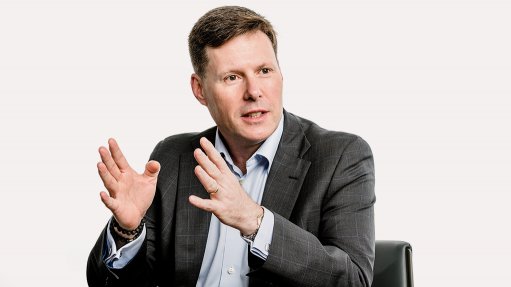
Izasa regional director Rob White says demand for corrosion protection is driven by projects such as the proposed regional rail development in Southern Africa, exponential growth in the mining sector, electrification and telecommuni- cations, as well as the need for housing.

“Although some industry participants are sceptical, new value-adding operations will be established in neighbouring countries. The replacement of poor regional infrastructure will provide opportunities similar to those offered by the large power station programmes of the 1970s and early 1980s,” White adds.

This year has been tough for the zinc industry on many fronts. In South Africa, zinc consump- tion is largely controlled by expenditure on infra- structure, specifically gross capital formation, which experienced a downturn after the initial spending following the 2008 financial crisis when governments worldwide attempted to kick-start economies through expenditure.
Nonetheless, large projects such as State-owned power utility Eskom’s Medupi and Kusile power stations and mining expansions have provided significant markets for galvanised products.

“This has, however, been isolated to regions, with zinc plants in Gauteng enjoying the best conditions,” White points out.

He believes that regional development will outstrip national development over the next few years, with regional opportunities, specifically in Angola and Mozambique, having improved.

Further, this year, growth in the automotive sector and other markets that consume galvanised products has also provided some respite from the poor 2010 sales of zinc, following the completion of 2010 FIFA World Cup projects.

Globally, White says, the mining and energy industries have provided steady, albeit small, growth in the international zinc industry.

“China continues to be the main driver of demand. In spite of the industry being healthy, there is some capacity underuse,” he points out.

Challenges

White says diversified South Africa-based resources group Exxaro Resources’ announcement in October that the production of zinc at its Zincor refinery in Springs, Gauteng, will effectively cease on December 31 will have an unknown long-term impact on the industry.

This follows the group’s announcement, in July, that it was planning to cease zinc production and was contemplating retrenchments in the base-metals division.

Further, White explains that local supply is about more than just sourcing metal and includes factors such as the commitment to developing product use and partnering with customers in their development efforts.

“There will be metal supply; however, it is unknown what the commitment will be to the market development process. With time, the development of the Gamsberg deposits and possible local refining will enable improved local commitment to the development of the market, but there is concern that a competitive development edge will be lost.

“Further, the horizon depends on whether it would be wise to produce zinc concentrate at first and export this or to add value to the metal,” White points out.

In terms of the South African business environment, White notes that government needs to debottleneck its array of logistics services by focusing on the development of ports and railways.

“Without this change, the industry will remain constrained and investors will look elsewhere for returns. While there is much talk of enabling environments, there is a real need to walk the talk.”

Trends

Most technological advances have been in the downstream value- adding industries.

White says new alloys are enabling competitive die-casting production and the galvanising of new steels, especially those used in automobile manufacturing.

Further, work continues on zinc air battery technology, as the aim is to establish the technology as a contender in fuel cell design for transport in the future.

Zinc air batteries are electrochemical batteries powered by oxidising zinc.

“Local institutions have participated in this international research. South Africa’s mineral research organisation, Mintek, and the Council for Scientific and Indus- trial Research are providing good input,” White notes.

Training

The age of personnel in the local zinc industry is skewed towards 40 years and over, pointing to a need for young skilled persons.

White says Izasa participates in many forums to improve the education of existing personnel and to attract young people to the industry.

The association is currently working with Exxaro, South Africa- based miner Impala Platinum and government on various skills development programmes. One such education and training programme is the establishment of the Lepharo Base Metals small business incubator in Springs, Gauteng.

“The idea behind Lepharo is to encourage small business development in all the aspects of base metals use,” White claims.

Izasa also sits on the steering committee of the National Foundry Technology Network, an initiative sponsored by the Department of Trade and Industry, which has developed an education and personnel development programme.

Further, the Hot Dip Galvanis- ing Association has developed an operators training course, which provides for capacity building.

“The local zinc industry has seen great turmoil over the past year, from poor market conditions to the demise of local supply. However, irrespective of whether South Africa retains its position as the gateway into Africa, the region will develop at a speed that may well be surprising,” White concludes.

Demand

Izasa’s latest industry report, the ‘2010 Market Study on the South and Southern African Zinc Market’ estimates local zinc use at about 135 000 t/y, valued at about $250-million.

However, this omits the delivered value adding, which would easily quadruple this figure. Therefore, the industry has a value of around $1-billion a year for South Africa.

White says this figure is steadily growing with the arrival of value adders, such as aluminium-zinc coating company Safal Steel, in Cato Ridge, KwaZulu-Natal.

However, there has been a decline in recent years in the zinc die-casting industry, largely owing to some policy errors and the lack of critical mass in the industry.

“The zinc die-casting industry has lost over 75% of its capacity since 1994. In contrast, the use of zinc in chemicals is showing great promise and growth rates are exceeding 20% a year,” he states.

Outlook

The International Lead and Zinc Study Group (ILZSG) expects a fall in the rate of growth of Chinese demand to 2.1% in 2011, which is likely to be partially attributable to the destocking of unreported inventories after a build-up of stock in 2010.

However, the group forecasts Chinese apparent use to rise by 5.7% in 2012.

Meanwhile, European demand in 2011 is predicted to increase by 2.5% and then by a further 1% in 2012. A similar trend is expected in the US, with modest rises both this year and next of 1.4% and 1.3% respectively.

Demand is forecast to continue to rise in Brazil, India, the Republic of Korea and Turkey in 2011 and 2012. In Japan, growth is expected to resume in 2012 after a slowdown this year.

The ILZSG also predicts that global demand for refined zinc metal will grow by 2.2% to 12.85-million tons in 2011 and by 3.9% to 13.35-million tons in 2012.

Primarily driven by increases in China, India and the Republic of Korea, world refined zinc metal output is forecast to rise by 2.7% to 13.16-million tons in 2011 and by 2.4% to 13.48-million tons in 2012.

The group expects supply to continue to exceed demand in the world refined zinc metals market in 2011 and 2012. A surplus of about 312 000 t is forecast this year with a more modest excess of about 133 000 t expected in 2012.

The ILZSG predicts a rise in global zinc mine supply of 4.3% to 12.77-million tons this year that will primarily be influenced by increases in China, India, Kazakhstan, Mexico and the Russian Federation, which will outweigh declines in Peru and Australia.

In 2012, production in China, India and the Russian Federation is expected to continue to rise and this, together with a forecast recovery in Peru and expected additional output in Burkina Faso, Canada, Saudi Arabia and Uzbekistan, is predicted to result in a further increase in world production of 4.8% to 13.37-million tons.

The ‘Base Metals’ research report states that, in 2010, zinc started at a price of about $2 600/t and reached a low in the middle of the year at $1 700/t.

However, further market dynamics, in particular an expected tightening in the supply-demand balance, owing to falling zinc output, are likely to provide substantial support for the zinc price going forward.

Edited by: Tracy Hancock

To subscribe to Mining Weekly's print magazine email subscriptions@creamermedia.co.za or buy now.

Subscribe Now Login


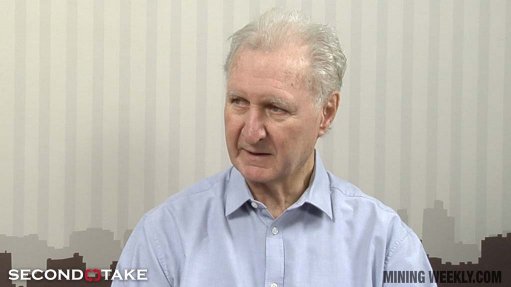
ROB WHITERegional development will outstrip national development
 
Picture by: Izasa
ROB WHITERegional development will outstrip national development
 
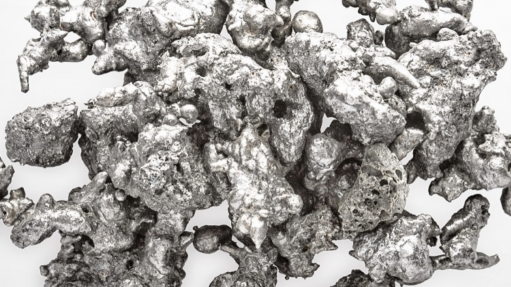
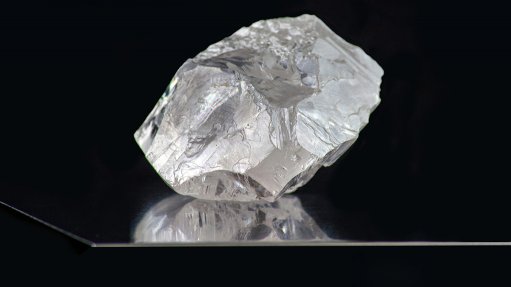
USE IN CHEMICALS The use of zinc in chemicals is showing great promise with growth rates exceeding 20% a year
 
Picture by: Bloomberg
USE IN CHEMICALS The use of zinc in chemicals is showing great promise with growth rates exceeding 20% a year
 
 
Previous Play Next