GOLD 1773.83 $/ozChange: 16.93
PLATINUM 1717.50 $/ozChange: -1.50
R/$ exchange 7.73Change: 0.00
R/€ exchange 10.25Change: 0.00
 
We have detected that the browser you are using is no longer supported. As a result, some content may not display correctly.
We suggest that you upgrade to the latest version of any of the following browsers:
         
close notification
powered by
Advanced Search


Home
 
Magazine
 
Features Library
 
Coal
 
 
Mozambique Coal Projects
Concern over proposed amendments to Mozambique’s mining law
 
9th December 2011
TEXT SIZE
Text Smaller Disabled Text Bigger
 

The proposed amendments to Mozambique’s mining legislation could discourage international entities from investing in the coal-rich country, as it will raise the level of uncertainty in investment security, market research company Frost & Sullivan research associate Christy Tawii tells Mining Weekly.

She says, to increase the mining sector’s current 3% contribution to Mozambique’s gross domestic product (GDP), the State plans to amend its mining legislation to increase its participation in the sector by securing a stake in strategic mining projects.

“The Mozambique government and mining companies are currently in discussions on how the proposed changes could effect existing and future mining operations,” Tawii notes.

In November, at this year’s Coaltrance Mozambique conference, Mozambique Mining Minister Esperança Bias announced that the department expected to submit the draft of the revised mining law for Cabinet approval by the end of this year.

However, Bias told news source Reuters that she had no plans to make changes to the mining taxes and royalties system.

Currently, Mozambique levies a 35% corporate tax on miners and its mineral royalties are relatively low. Companies are also subject to a production tax of between 10% and 12% for diamonds and between 3% and 8% for other minerals, including coal.

Details of the new law include the speeding up of the licensing process and simplifying rules for mining companies planning to operate in Mozambique, Bias said.

Other aspects of the law that the government is likely to change are the time- frames for mining production. This is meant to attract more companies to explore the mining industry, says Tawii.

The current legislation enables mining to start 15 years after a mining licence has been granted. It is expected that the new legislation will force exploration and mining companies to start production within two years of licensing.

Further, Tawii says skills shortages, environmental concerns, water short- ages, regulatory concerns and electricity supply shortages are other issues that are likely to impede the development of new coal mines in Mozambique.

“It is unlikely that the country will have adequate skills in the mining sector to meet the demand from the large-scale coal-mining development projects. Therefore, it will have to rely on foreign labour to compensate for the skills shortages,” she states.

However, the Mozambique government recently approved a training strategy for the mineral resource sector that seeks to increase the skills levels of the mining workforce.

About 4 500 mining specialists, including geologists, metalworkers, engineers and hydrologists, are expected to be trained under this scheme over the next ten years.

“In the medium term, however, mining companies will have to rely on foreign labour to fill skills gaps in the mineral resources sector,” Tawii asserts.

Production

In terms of production trends, Tawii says, over the past ten years, Mozambique’s coal production output has been range bound between 15 000 t and 40 000 t a year. Total coal production drastically declined to 3 400 t in 2005, following production, equipment supply and infrastructural challenges.

However, coal production output increased sharply from 25 900 t in 2009 to 35 700 t in 2010, with Mozambique’s coal production projected to grow to 20- million tons a year by 2015.

Tawii says Brazilian mining giant Vale’s Moatize coal operation, and global miner Rio Tinto’s Benga and Zambeze coal mine projects, in Mozambique’s Tete province, will account for the bulk of the increased production.

Meanwhile, Mozambique’s coal production is projected to further increase to 110-million tons a year when projects by other mining companies such Mozambi, Jindal Steel, Nippon Steel, Eurasian Natural Resource Corporation, Eta Star and Coal of India become fully operational.

Tawii is concerned that the expansion of coal projects in Tete will result in capa- city constraints at Mozambique’s Maputo port, owing to a lack of facilities and warehouses to handle additional loads.

To tackle this challenge, Mozambique’s Ports Development Company plans to invest $1-billion over the next 20 years to improve infrastructure at the country’s main ports to meet international standards.

Sena Railway Refurbishment

Currently, Tete does not have sufficient rail and road infrastructure that links with the ports at Beira, Nacala and Maputo.
Tawii states that the expected increase in coal production is also likely to highlight the inadequate transportation infrastructure, raising concerns over the transportation of minerals to the country’s major ports for export.

“In the medium term, the refurbishment of the Sena rail line would [have the capacity] to carry coal out of Tete; how- ever, this would be insufficient to transport the anticipated combined maximum production of 50-million tons from the Benga and Zambeze projects and Vale’s Moazite operation,” she stresses.

Plans are under way to expand the Sena rail line after it reopens in 2013 to ensure that it can handle the 20-million tons of coal a year by 2015.

Coal Projects

Frost & Sullivan have identified 14 mining projects across seven commodities, including coal, currently in the feasibility stage, one in the bankable feasibility study stage and five projects under con- struction in Mozambique.

Coal development projects in the pre- feasibility stage are the Zambeze project, which is set to start production in 2014, and development and exploration company Ncondezi Coal’s $367-million Ncondezi coal project, which is expected to start production in the last quarter of 2014 or the first quarter of 2015.

Meanwhile, global diversified miner BHP Billiton’s Mozal III expansion is the only project in the bankable feasibility stage and has a capital expenditure budget of $3-billion.

Among the projects under construction is the Benga mine, where production is scheduled to start at the end of this year. The mine has a projected production capacity of four-million tons a year.

Mining group Beacon Hill Resources is also currently constructing a larger openpit mine at its Minas Moatize coal mine, with production starting in 2015.

Further, the coal sector has 11 expansion projects that have a combined value of $9.45-billion, accounting for 61% of the total project value of Mozambique’s mining industry.

Tawii says, following the development of these coal mines, the mining industry’s contribution to Mozambique’s GDP is expected to increase to 7% by 2015.

She points out that despite the Moatize basin, in Tete, being the most developed, there are other opportunities in other basins, such as the Maniamba basin, in Niassa, where international companies are currently exploring.

“This represents more growth opportunities for the coal sector,” Tawii concludes.

Edited by: Tracy Hancock
FULL Access to Mining Weekly and Engineering News - Subscribe Now!
Subscribe Now Login


Hide Comments  
 
This article contains no Comments


All comments must be approved by our editors, click here to read the editorial guidelines for comments. Please allow some time for our editors to approve your comment after posting.
 * Required Fields

image
image
 *


image
image
 *
 

image
image
 

Verification Image

image
image
 * Please enter the text you see in the above image.


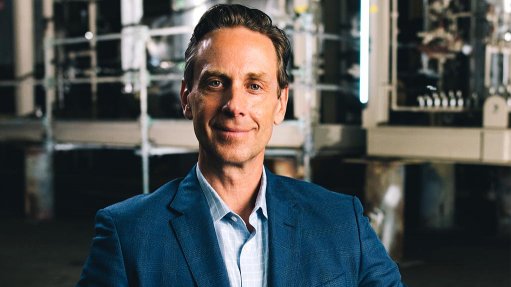
CHRISTY TAWII Skills shortages, environmental concerns, water shortages, regulatory concerns and electricity supply shortages could also impede the development of new coal mines in Mozambique
 
CHRISTY TAWII Skills shortages, environmental concerns, water shortages, regulatory concerns and electricity supply shortages could also impede the development of new coal mines in Mozambique
ESPERANÇA BIAS There will be no changes made to Mozambique’s mining taxes and royalties system
 
Picture by: Bloomberg
ESPERANÇA BIAS There will be no changes made to Mozambique’s mining taxes and royalties system
COAL BOOM Vale’s Moatize coal operation and global miner Rio Tinto’s Benga and Zambeze coal mine projects, in Mozambique’s Tete province, will account for the bulk of the country’s increased production
 
Picture by: Agência Vale
COAL BOOM Vale’s Moatize coal operation and global miner Rio Tinto’s Benga and Zambeze coal mine projects, in Mozambique’s Tete province, will account for the bulk of the country’s increased production
 
Previous Play Next