GOLD 1558.85 $/ozChange: -32.96
PLATINUM 1433.00 $/ozChange: -26.50
R/$ exchange 8.36Change: -0.03
R/€ exchange 10.57Change: 0.06
 
We have detected that the browser you are using is no longer supported. As a result, some content may not display correctly.
We suggest that you upgrade to the latest version of any of the following browsers:
         
close notification
powered by
Advanced Search


Home
 
Magazine
 
Weekly Features
 
Health & Safety in Mining
 
 
Chamber of Mines implements leading practice adoption programme
 
15th May 2009
TEXT SIZE
Text Smaller Disabled Text Bigger
 

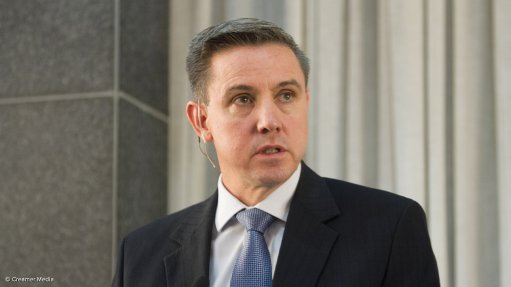
The South African Chamber of Mines (CoM) has started a programme to help the mining industry adopt leading practices in terms of health and safety.

CoM safety and sustainable development adviser Sietse van der Woude says that the CoM recognised that sharing leading practice knowledge at con- ferences and other forums was not achieving the desired success at an implementation level, and so the CoM piloted a programme to assist the industry in adopting leading practices.

It is the largest single-year project to be implemented by the CoM in the past decade. With the success of the pilot programme, the leaders of the mining industry have now agreed to the establishment of a learning hub to promote learning among companies that conduct business in critical risk areas.

Three teams have been established to tackle the three most significant problem areas in health and safety, namely dust, noise and falls-of-ground. The teams consist of highly skilled and experienced professionals in the relevant fields, whose task it is to establish what the leading practices are in the three focus areas.

Following the identification of leading practices, the next stage is to test and thoroughly document the practices’ effectiveness and implementation specifics, from technological issues to people issues.

The third stage in the programme is to demonstrate the leading practice at various mines and, following this, to promote the adoption of the practice.

The three focus areas are in different stages of progress, with efforts in the area of noise and dust reaching the final adoption promotion stage.

“Our target is to have zero fatalities, zero injuries and zero diseases in our industry,” says Van der Woude.

“We are working very hard with government and the unions to actually achieve that target. Fatalities and injuries have a huge impact, not only on the individuals involved, but on their families and communities too.

Every fatality is one too many.”

A report on industry fatality statistics, detailing the total number of fatalities in each commodity sector of the South African mining industry for over 20 years, shows that the fatality toll in the South African mining industry has dropped considerably from a total of 774 fatalities in 1984, to a total of 177 fatalities in 2008.

The total fatality toll has dropped steadily over the years as technology, education, awareness, legislation, regulation and corporate social respons- ibility improved. In essence, this is a reduction in fatalities from 0,51 for every million hours worked, to 0,15 fatalities for every million hours worked.

However, from 1998 to 2008, the drop in fatalities improved dramatically, showing a 60% improvement in one decade. Van der Woude attributes this to a number of factors, including the political transformation that took place in the country in 1994, and South Africa’s subsequent inclusion in the global scene again, opening the door for global learning.

From 220 fatalities, in 2007, to 177 fatalities, in 2008, a 22% reduction in fatalities is evident, along with a 28% reduction in the fatality rate. Van der Woude says that this is a significant achievement, and shows the steady drop towards the ultimate goal of zero fatalities.

“This is the best performance in this industry, since about 1904,” adds Van der Woude. “However, worth noting is that the current conditions in mining are more difficult than in the past. We are mining much deeper than before, and one has to deal with more complex environments.”

In comparison to safety benchmark countries’ fatality rates, such as those of Australia, Canada and the US, South Africa is still about 50% worse off, he says.

“We assume the benchmark countries make improvements of about 10% a year. So, for us to catch up with them, we’ve set ourselves the milestone of improving by at least 20% a year,” he says. “That milestone has been agreed upon by government and the unions.”

Also worth noting, is gold-miner Anglo Gold’s 60% improvement in fatality and injury statistics between 2007 and 2008, he adds, as well as more than two years without any fatalities at one of platinum-miner Anglo Platinum’s operations.

“What is important is that the industry believes it can achieve zero fatalities,” he says. “As the belief in the industry grows, so does the amount of safety records that are broken. We need to encourage the belief that it can be achieved.”

He explains that Anglo Gold’s 60% improvement came as a result of encouraging this belief, changing the culture of the organisation, rather than investing in new equipment.

Van der Woude says that there are statistics that show that 96% of all accidents are caused by human behaviour. This means that for only 4% of the time, accidents result from malfunctioning machinery and other events outside the influence of people.

“However, this is an oversimplification of the problem,” he explains. “There are a whole host of things that impact on a person’s decisions and behaviour, which leads to the ultimate conclusion that the culture, and proper leadership, are absolutely critical.”

In 2008, a CEO roundtable meeting was held and attended by CEOs from about 30 different mining companies and associations. It was agreed that, in principle, all accidents and occupational health incidents are preventable, and when it comes to uncontrollable factors, such as seismic events, more effort will be put into researching ways to improve safety. A road map to zero harm was also developed during this event.

“As the CoM, we are working with government and the unions, through a tripartite relationship termed the Mine Health and Safety Council, to encourage a shift away from a focus on punitive actions to a focus on preventive actions, when it comes to health and safety. In an overly punitive culture, people are not as forthcoming and shared learning is hindered. Further, an overly punitive approach can drive people and skills away from the industry. Instead, we want to encourage a culture of care and learning,” Van der Woude concludes.

Edited by: Shannon de Ryhove

To subscribe to Mining Weekly's print magazine email subscriptions@creamermedia.co.za or buy now.

Subscribe Now Login


SIETSE VAN DER WOUDE
Fatalities and injuries have a huge impact, not only on the individuals involved, but on their families and communities too
 

SIETSE VAN DER WOUDE Fatalities and injuries have a huge impact, not only on the individuals involved, but on their families and communities too


Facts
Noise – use of an electric drill that is five times quieter than the drills currently being used Dust – use of a fogger that causes a 90% reduction in dust Falls-of-ground – reduction of safe-making time, as well as improved quality of safety-enhancing efforts
Chamber of Mines Road Map to Zero Harm in the South African Mining industry Strengthen the culture of health and safety ➢Implement culture transformation framework ➢Improve compliance culture ➢Improve tripartite relations Build capacity and promote a learning industry ➢Establish centre of excellence for research, research implementation and capacity building ➢Improve occupational health and safety capacity ➢Improve literacy ➢Reduce scarce skills ➢Do mining research to develop better mining methods ➢Establish CoM learning hub Make working places safer and healthier ➢Implement industrywide policies in critical risk areas ➢Improve life style of workers