GOLD 1251.17 $/ozChange: 5.53
PLATINUM 1554.50 $/ozChange: 22.50
R/$ exchange 7.25Change: 0.05
R/€ exchange 9.29Change: 0.05
 
We have detected that the browser you are using is no longer supported. As a result, some content may not display correctly.
We suggest that you upgrade to the latest version of any of the following browsers:
         
close notification
powered by
Advanced Search


Home
 
Most Popular Articles
 
 
EXPLORATION & DEVELOPMENT
Canadian junior on the fast track to reopen former Billiton mine
0 COMMENTS  |  
ADD A COMMENT PRINT
 
 
22nd May 2008
TEXT SIZE
Text Smaller Disabled Text Bigger
 
Toronto-based Adex Mining hopes to be in a position this time next year to make a production decision on its Mount Pleasant project, in New Brunswick, Canada, which could then see it producing its first metal in 2010.

Mount Pleasant was built and developed by the then Billiton in the eighties, but was closed and flooded in 1985, after less than three years in operation, as sliding metals prices meant the mine was no longer economic.

Enter Adex, which picked up the property a decade later, in 1995, although a lethargic commodities environment resulted in little more than some exploration and testwork, before the site was put on care and maintenance a couple of years later.

However, demand for both tungsten and molybdenum has surged over the last few years, prompting the company to begin taking steps towards reopening the mine.

The price of molybdenum, which is used to strengthen steel and prevent corrosion, has risen from around $10/lb in 2004, to a peak of around $40/lb a year later, and remains above $30/lb.

Both tungsten and molybdenum have extremely high melting points, making them speciality metals in high demand, particularly with limited sources of new supply coming into the market.

Based on historic resource estimates, president and CEO Kabir Ahmed says Mount Pleasant contains an estimated 60-million pounds of molybdenum and 100-million pounds of tungsten.

Additionally, since acquiring the Mount Pleasant property, Adex has identified significant amounts of tin and indium in an adjacent deposit on the property.

The company is now drilling to define the resources at both the tungsten/moly and tin/indium zones, with the goal of completing NI 43 101-compliant resource estimates for both, Ahmed said in an interview in Toronto on Thursday.

The company is 'twinning' drill holes at the tungsten/moly zone, to replicate and confirm the historical data compiled by the mine's former owners,

The definition drilling programme on the zone is expected to be completed by June, with results expected a month or two later.

(Ahmed points out that one of the side effects of high commodity prices is increasingly lengthy waits for drilling results from laboratories, thanks to the high volumes they are seeing.)

Once the results are received, the company's technical consultants will prepare an updated indicated-category resource estimate, which Ahmed is hoping to have by August.

“We're hoping that by August, possibly September, we can then initiate a full-blown feasibility study on the tungsten/molybdenum zone.”

The feasibility study could take 12 to 18 months, and, if the results are favourable and the neccessary regulatory approvals are received, Mount Pleasant could begin production less than two years after that.

“I think, conservatively, between 24 and 30 months from today, we could be in production,” Ahmed said.

The company has raised C$12-million in equity financing since listing in July last year.

“So we're fully financed and I think we're fully financed for the next two years, which should take the company to feasibility."

INFRASTRUCTURE IN PLACE

Billiton – now BHP Billiton, the world's biggest mining group – spent about $150-million to bring the Mount Pleasant mine into production.

Adex expects to spend around the same amount to restart the mine.

A lot of the buildings, including ore storage, conveyor galleries, warehousing and office buildings, are still standing and would require “modest” effort and capital to bring them back to useable condition, Ahmed says.

Further, and more significantly, the project's tailings dam is still in place and Adex recently received approval from the New Brunswick authorities to have the dam's permit reinstated.

“If we didn't have that in place it would cost us probably $20-million to build and construct a tailings dam, and probably upwards of two to three years of regulatory approval process.”

BLUE SKY POTENTIAL

While the tungsten/moly zone is first in line for production, it is the tin/indium zone where Ahmed sees the real blue-sky potential for Mount Pleasant.

The price of tin hit a record of $21 000/t last month, and indium, which is used in plasma and LCD screens, as well as in photovoltaic cells for solar power generation, has also touched historic highs in recent months.

The metal has risen as high as $645/kg, from a low of about $200/kg ten years ago.

Most of the world's indium supply comes from China, Ahmed said.

“Whatever production there is is very limited, and so any new production would be easily sold into the market.”

Based on a 1997 study, the north and deep tin zones at Mount Pleasant contain a historic resource of 3,64-million tons of 0,80% tin, 107 parts per million indium, 0,87% zinc and 0,19 % copper.

Edited by: Liezel Hill
 
 
Topics in this article


Hide Comments  
 
This article contains no Comments


All comments must be approved by our editors, click here to read the editorial guidelines for comments. Please allow some time for our editors to approve your comment after posting.
 * Required Fields

image
image
 *


image
image
 *
 

image
image
 

Verification Image

image
image
 * Please enter the text you see in the above image.


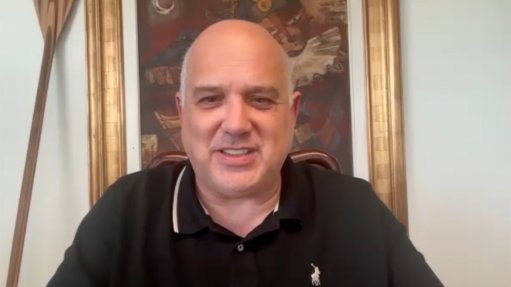
Adex Mining CEO Kabir Ahmed discusses the company's Mount Pleasant project
 
Previous Play Next