PERTH (miningweekly.com) – The Queensland Resources Council (QRC) on Friday labelled the Australian federal government’s proposed 40% resources ‘super tax’ as a ‘tax grab’ with serious implications.
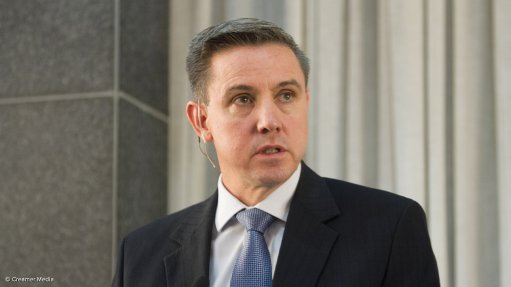
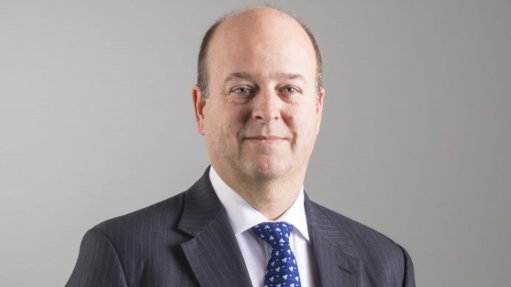
Speaking in Brisbane, QRC CEO Michael Roche said that the super profits tax (SPT) was not a tax on super profits, but rather a tax on the profits of industry sector judged to have a limitless ability to pay.
“On the SPT profit base, we are looking at an effective tax rate for resource companies in Australia of around 57%. This is one of the highest rates in the world – second only to Norway at a reported 78%.”
The difference was, that since 1963, the Norwegian government has owned almost one-third of the country’s listed companies. “I mention that just to underline that you can tax yourself to death if the money is staying in your pocket.”
The industry’s tax contribution in 2008/9 alone was A$22-billion, with mining companies alone having paid around 18% of company income tax, even though the sector made up around 8% of the national economy.
Roche added that Australian Tax Office figures already showed that the overall average tax rate for the mining sector was 13% higher than the all-industry average. “Not surprisingly, Australia’s two largest taxpayers are mining companies.”
During the past financial year, the Queensland mining sector paid A$3,4-billion to state royalties, almost A$6-billion in salaries, and around A$4,2-billion in taxes to the federal government.
Roch noted that the Federal government estimated that, minus state royalty credits, the new resources tax would collect A$12-billion over the first two years of implementation.
“We believe this will be substantially higher when the retrospectivity elements of the policy start to kick in, so the take could quickly increase to be in the order of A$15-billion to A$20-billion at current prices.
“The ramifications of this are going to be felt around this room, around the country and around the world, but with polar variations in response,” he added.
WAVE OF UNCERTAINTY
“Every resources company in Australia is reviewing its current operations and forward plans based on what’s been described as a ‘wave of uncertainty’.”
“We’ve seen enough evidence here and abroad in the past week of how jittery the world is when it comes to keeping money safe.”
Australia may be the world’s largest exporter of coal, but it is a bit player in terms of global consumption. “In fact, we make up only 6% of the world’s annual black coal production, but I might add that it is of a quality and consistency second to none,” Roche said.
Australia is home to 13% of the world’s economic demonstrated resources of copper, 17% of its iron-ore and 11% of its gold. Roche noted that although the country has the world’s largest resources of uranium, zinc, lead and silver, there will have to be a redefining of economic recovery costs in light of this new tax.
“Most people are unaware that between 2002 and 2007, Australia actually lost global market share in those mineral commodities by anything up to 3%. That was largely a consequence of rail and port congestion. Now it looks like our cash supply line is about to be jammed up.”
He said that, for Queensland, the new resources tax has effectively rolled the dice on the future of more than A$100-billion-worth of new investment proposals.
Chief among these is the A$55-billion slated for the development of Queensland’s newest export – liquefied natural gas (LNG) drawn from the coal fields of the Bowen and Surat basins.
Almost as much capital expenditure remains under consideration for the expansion of existing coal mines and the bringing on line of the next Queensland coal province, the central west’s Galilee basin, he said.
“Sadly, under this new super profits tax, they may not occur in our lifetimes – and perhaps not at all if the capital they require takes flight.”
FAIR SHARE?
Reuters reported that Australia's government might be willing to give ground to big miners over a new tax on profits, as resources firms kicked off a major election-year advertising campaign to overturn the tax.
However, Prime Minister Kevin Rudd played down talk of a watered-down tax proposal, saying the government had "got the rate about right".
"We want to make sure that by imposing a super tax on the resources of Australia's most profitable mining companies that the Australian people are getting their fair share of the resources that they themselves own," Rudd was reported as saying.
But Reuters also reported that Resources Minister Martin Ferguson had begun a national "listening tour" to consult with resource companies.
In a paid-for advert, critics of the tax said that the minerals resources industry paid A$80-billion in taxes and royalties in the past decade and that the resources sector paid Australia's highest tax rate.
“That's a fair share," the advertisement read.
To subscribe to Mining Weekly's print magazine email subscriptions@creamermedia.co.za or buy now.