GOLD 1592.82 $/ozChange: 5.77
PLATINUM 1469.50 $/ozChange: 14.00
R/$ exchange 8.29Change: 0.07
R/€ exchange 10.59Change: 0.03
 
We have detected that the browser you are using is no longer supported. As a result, some content may not display correctly.
We suggest that you upgrade to the latest version of any of the following browsers:
         
close notification
powered by
Advanced Search


Home
 
Breaking News
 
 
LEGISLATIVE ENVIRONMENT
Auctioning mineral assets is way to go, says adviser to Liberia
 
6th March 2009
TEXT SIZE
Text Smaller Disabled Text Bigger
 

Former Mintek CEO and one-time Department of Trade and Industry DDG, Dr Paul Jourdan, played a role in making the South African government the custodian of mineral rights in South Africa.

Until the new regime was enforced, mineral rights were the preserve of the private sector in South Africa, which was out of kilter with what pertained elsewhere in the Western world.

Now he is advising the Liberian government on the concessioning of its mineral assets.

Liberia has decided on the auction route, which Jourdan says is benefiting the county.

In fact, Jourdan is so taken by the auction model that he believes that it would have been a preferable option to have pursued in South Africa.

Mineral activities in the West African country of Liberia, which has now well and truly emerged from two civil wars under Africa’s first woman President, Ellen Johnson-Sirleaf, have over the past few years been dormant, with few or no regulations to govern them.

It was from this vantage point that the international community imposed sanctions on Liberia’s diamond and mining sectors. With the removal of sanctions, world bodies are concerned about Liberia’s ability to explore adequate regulations/ policies to monitor and manage these vast resources.

However, there is no doubt that despite contentious issues, there is vast mineral potential in the country.

Jourdan, who is the Governance and Economic Management Assistance Programme adviser to the Ministry of Lands, Mines and Energy in Liberia, has played a key role in auctioning off mineral assets to the highest bidder on behalf of the Liberian government, in which he sold iron-ore rights to the Chinese for $2,7-billion, and other rights for $15-billion.

He now regrets that South Africa never embarked on the same route.

He calculates that, if South Africa had, it would have created a large number of mining jobs.

In that way, it might have been far more pervasive than the policy of black economic empowerment, which is now experiencing problems as a result of the global economic meltdown.

Jourdan believes that had South Africa auctioned known State mineral assets in the Bushveld Complex, which is a veritable Aladdin’s cave of platinum and chrome minerals, as well as Kalahari iron and manganese, the quality of which is among the world’s highest, the benefits for the country and its people could have been huge.

He cautions, however, that it is necessary to conduct such auctions against developmental criteria that embrace investment, value addition, infrastructure, linkages, competitive pricing of mineral products and government revenue.

Jourdan says that Liberia auctions its known mineral assets under the country’s Public Procurement and Concessions Act (PPCA).

The auctions take place within a framework of the technical and financial capacity of the bidders to undertake the development of the resources and the price of the discovery, which is paid in advance along with a rent tax.

He says that areas with no known mineral deposits go through the standard two-year and three-year exploration licensing procedure, with 25-year mining licences being granted under a mineral development agreement (MDA).

The PPCA of 2005 requires that all State assets be concessioned in a transparent and competitive manner.

Jourdan says that, in essence, mining licences are public–private partnerships, in which a State-owned mineral asset is leased for development by the private sector for 25 years. However, he notes, the asset is not returned to the State at the end of the lease, but is consumed, which, he says, is why minerals carry a royalty and a resource rent tax.

Jourdan says that while past civil wars in Liberia have hampered mining progress, the political scene is relatively stable now.

“The civil disturbances have left a destroyed infrastructure and the minerals sector will be the main driver of its rehabilitation, in terms of rail, road, ports, power, and water,” he says.

He says that the presence of more than 10 000 United Nations troops in Liberia renders the possibility of a resumption of hostilities remote.

He adds that most of Liberia’s geology is a Precambrian mobile belt with remnants of greenstone belts. The main potential, he notes, is in iron-ore, gold, diamonds, base metals and coastal heavy mineral sands (HMS).

He maintains that the main long-term mining prospects in the country reside in large-scale iron-ore mines and small to medium-scale gold and diamond operations.

He points out that coastal HMS are unassessed, while offshore, several oil and gas blocks have been concessioned for exploration.

ArcelorMittal is carrying out an iron-ore project at Nimba; the Bong prospect has been concessioned to China-Union; and the Western Cluster iron-ore deposit is being rebid.

BHP Billiton is looking at Goe Fantro and Kitoma, Mano River Resources is assessing Putu, and the Liberian government is assessing Wologisi for possible tender.

Each project, with infrastructure, requires a capital expenditure of $1,5-billion to $2,5-billion.

CONTENTIOUS ISSUES


Liberia is not without its contention in the area of legislative environment and South Africa’s Delta Consolidated Mining has decided to take legal action against the Liberian government for first declaring it the provisional winner of the $1,6-billion Western Cluster concession in February 2008 and then disallowing it from taking part in the rebid process.

Delta has applied to the Liberian Civil Law Court for judicial review and applied for an order preventing the government from reopening a bidding process.

It has been granted an interim stay on the rebid.

CHINA SCORES

A celebrated deal is that of China-Union Company, which has signed a 25-year mineral development agreement with the Liberian government for the exploration and mining of iron-ore in the Bong Range. One of the provisions of the $2,7-billion transaction is a requirement that the company pays $40-million before a sod is turned.

The international nongovernmental organisation, Global Witness, and Green Witness say that, despite the positive aspects of the contract, the agreement is vague in parts, potentially leaving it open to abuse.

They say that greater clarity and rigour are required to prevent serious problems from arising in the future, arguing that weaker elements of the contract are the provisions relating to the resettlement of communities, the fiscal stabilisation clause and the clauses governing the feasibility study.

Ultimately, they say, the contract is only as effective as its implementation. As such, they state, it is critical that significant international support is given to develop State capacity, local civil society and legal avenues to provide the checks and balances needed to ensure oversight of the contract’s execution.

Global Witness campaigner Natalie Ashworth is encouraging Liberia lawmakers to use their voice to ensure that the final, ratified Bong Mines contract represents the best possible deal for Liberia and its people.

The Liberian Ministry of Lands, Mines and Energy and the US Agency for International Development last year sponsored a two-day national mineral stakeholders’ workshop on the finalisation of the proposed MDA and mineral policy reviews and the implementation of a Web-based mineral cadastre information management system.

Some 150 participants, representing various stakeholders, including government agencies, miners, brokers, mining agents, concessionaires, advocacy groups, conversationists and civil society, attended the workshops.

An issue of concern is the local value add, participants lamenting that Liberia has for long made no attempt to process minerals locally.

Inadequate electricity generation is an impediment, as is the lack of human resource capacity.

Most of the participants wanted shorter periods of exploration and lower-cost surface rental fees and land purchase prices.

The Ministry of Lands, Mines and Energy also recently conducted an open forum with various stakeholders in the minerals and concessions sector to discuss the draft mineral exploration regulations.

The forum, which was an undertaking geared at building consensus on the exploration regulation document that was opened for public comments or inputs, in August last year, brought together major stakeholders directly or indirectly connected to exploration regulations and other such documents.

The right to explore does not grant to the licensee the right to engage in bulk sampling or pilot mining and recovery except in compliance with Section 13.2, or to conduct exploration outside licence areas, or to conduct exploration in any licensed portion after it has been surrendered.

A class A miner has no right to mine within a class C region without consent but a class A miner can carry on sampling and other exploration activities within adjacent blocks.

Edited by: Creamer Media Reporter

To subscribe to Mining Weekly's print magazine email subscriptions@creamermedia.co.za or buy now.

Subscribe Now Login


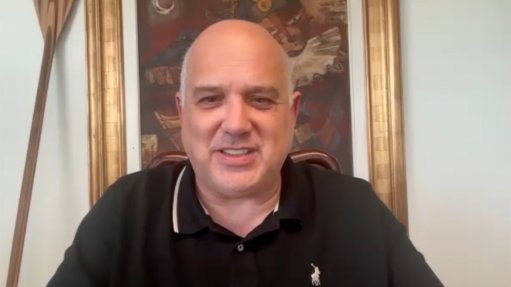
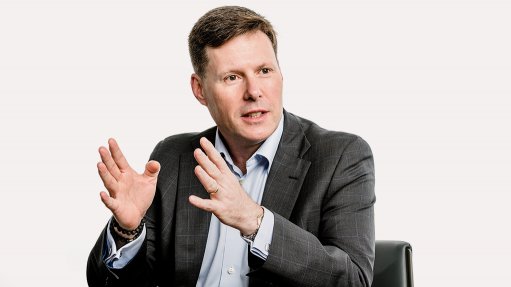
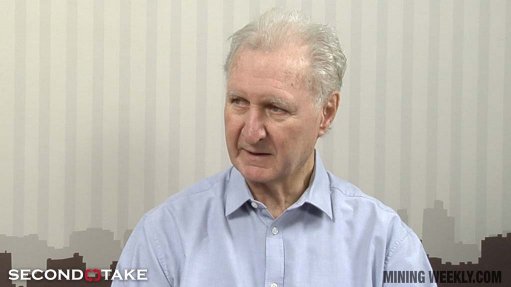
South Africa's Dr Paul Jourdan, who is involved in the raising of billions of dollars for the Liberian government from the the auctioning of the country's mineral assets
 
Picture by: Duane Daws
South Africa's Dr Paul Jourdan, who is involved in the raising of billions of dollars for the Liberian government from the the auctioning of the country's mineral assets