JOHANNESBURG (miningweekly.com) – Midtier platinum miner Aquarius has suspended funding for the jointly-owned Blue Ridge platinum mine, because of low platinum-group metals (PGMs) rand prices, the ASX-, LSE- and JSE-listed company announced on Wednesday.
The suspension of the funding, and the pending decision by the board to place Blue Ridge on care and maintenance could “likely lead to some job losses”, London-based business development executive Gavin Mackay told Mining Weekly Online.
The mine, which has been closed for redevelopment since August 2010, employs some 1 400 workers. Mine contractor Murray & Roberts Cementation has initiated the processes with the relevant labour unions should the mine be placed on care and maintenance.
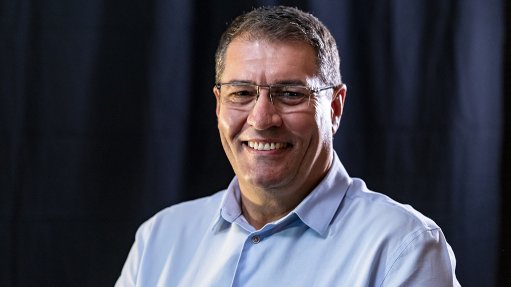
CEO Stuart Murray said the decision by Ridge Mining to suspend the funding of Blue Ridge was “not an easy one”.
“The findings of Blue Ridge management during the redevelopment project coupled with the current economic realities of the platinum industry in South Africa strongly suggest that the mine would be loss-making from some time to come. Under the circumstances, any other course of action would be financially irresponsible for the wider group,” he said.
The rand basket price for PGMs, on-mine cost inflation in South Africa and increases in the price of electricity, diesel and wages were significant constraints.
The Blue Ridge management would undertake a comprehensive evaluation of the mine to explore alternative mine plans and determine whether the Blue Ridge orebody could be efficiently exploited in a low rand price environment.
Blue Ridge has also initiated discussions around an asset-level debt restructuring with the Industrial Development Corporation and the Development Bank of Southern Africa, the mine's lenders, which are collectively owed about R370-million in interest-bearing debt by Blue Ridge, which was ring-fenced in the Ridge Mining group.
Meanwhile, Mackay told Mining Weekly Online that Aquarius was consolidating its position in South Africa to weather the high inflation and strong rand-price environment, and would be well positioned to take advantage of higher prices when it materialised.
The company announced on Wednesday that it had consolidated its ownership of Platinum Mile Resources (PlatMile), taking Aquarius’ shareholding to 91.7%, at a cost of R115.5-million, subject to certain conditions. It also said that the possible expansion and the extended life of the Everest mine could increase production by 25% to 250 000 oz of PGMs from 2017.
“We have recently completed two transactions in South Africa with the aim of increasing the life of the mines, and expanding the production of our core assets. This has provided us with good options around our South African operations, which remain the focus of the group,” Mackay said.
Aquarius acquired a further 41.7% interest from a combination of Mvelephanda Holdings and PlatMile management’s shares, subject to certain conditions. PlatMile, in which Aquarius previously owned 50%, is a tailings operation located near the Kroondal mine.
“Although a small transaction, it is attractively priced and will pave the way to an expanded tailings retreatment arm for Aquarius, which could become an important source of low-cost PGM ounces in an environment of ever-increasing mining costs," said Murray.
The company said the tailings operation has been a consistent source of profitable low-cost PGM ounces, despite lower-than-expected throughput at PlatMile at the time of the original purchase.
PlatMile produced about 20 000 oz in 2010. If it produced the same output in the coming year, the acquisition of an additional 41.2% would yield about 8 500 oz of PGM more to the production profile at Aquarius in 2012.
Mackay said that the company was planning further expansion at the operation, which would increase production at PlatMile.
Further, the significant benefits of the Booysendal South acquisition were becoming increasingly apparent, Murray said.
In May, the platinum miner agreed to pay Northam Platinum R1,2-billion to acquire mineral rights on farms adjacent to the Everest mine, on the eastern limb of the Bushveld Complex.
The PGM and associated base-metals rights acquired comprise several farms referred to as Booysendal South, which contained about 31,1-million ounces of PGM resources, after geological losses.
Preliminary estimates suggested that it would cost the company about R850-million to extend the mine life of Everest from the current six years to over 30 years, while simultaneously increasing production levels to make use of both current excess and potential expansion capacity at the Everest processing plant.
Preliminary indications also pointed to Everest being extended and expanded with industry-leading capital efficiency.
This capital would be spent primarily on a second decline shaft system, mining and underground infrastructure, plant debottlenecking and a new tailings dam to cater for the extended life of mine.
The Everest expansion would be brownfield in nature, with commensurately lower project execution and ramp-up risk, and would enable Everest to increase its presently planned steady state production from about 190 000 oz/y of PGM.
Feasibility studies and development in respect of the Booysendal project would be accelerated.
To subscribe to Mining Weekly's print magazine email subscriptions@creamermedia.co.za or buy now.


.gif)


_bme_new_120x360_nostone.gif)