Diversified major Anglo American has had two high-profile project acquisitions under Cynthia Carroll’s watch, both of which have gone from delight to disappointment.
The first is a copper project in icy Alaska, which has since received such a frigid response from Bristol Bay locals that it has slowed to a trickle, and the second is the acquisition of the MMX Minas-Rio and MMX Amapa iron-ore projects in Brazil, and MMX Mineracao e Metalicos, from Brazilian billionaire Eike Batista, which is bogged down in regulatory red tape and may now be three years late and 67% over budget.
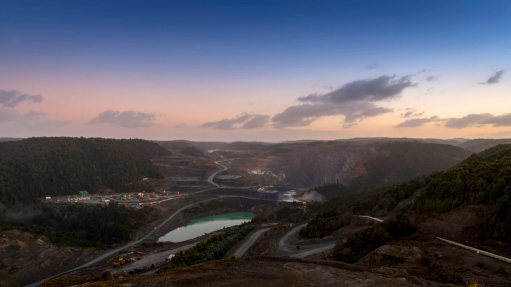
Carroll spoke most enthusiastically about the Alaskan Pebble project in August 2007, saying that it provided Anglo with “one of the very few remaining large-scale copper deposits”, and described Pebble as “a unique low-cost, long-life project”.
Likewise, the news release of January 17, 2008, also contained superlatives about the MMX Minas-Rio and MMX Amapa iron-ore projects in Brazil, and MMX Mineracao e Metalicos.
But both projects have disappointed, with angry Alaskans holding the Pebble project at bay because of concerns around its proximity to the world’s most productive wild sockeye salmon fishery, and the Brazilian regulatory environment turning the Minas-Rio project into, in Carroll’s words, “somewhat of a moving target” that is coupled to considerable cost overruns and opportunity loss.
The original capital-expenditure estimate for the Minas-Rio project was $2,7-billion. In February, Anglo raised that to $3,8-billion, and now it is expected to cost $4,55-billion.
The project was meant to be producing its first iron-ore in the first half of 2010, which would have created more space for platinum and diamonds, which are really only expected to come into their own later in the commodity cycle.
But, as a result of the Minas-Rio delays and cost uplifts, some analysts expect Anglo to have the weakest earnings momentum when compared with BHP Billiton, Rio Tinto and Xstrata.
“Ever since its purchase, Minas Rio has been a problem,” Credit Suisse said in a note.
Carroll told Mining Weekly that, once the remaining initial approvals were granted, she believed it would take 27 to 30 months to construct and commission the mine and the beneficiation plant, and to deliver the first ore on ship.
“We have secured 23 out of the 33 critical licences. We are looking for the second phase of our installation licence, which will allow us to commence construction around the mine as well as the beneficiation plant.”
Anglo is also seeking land access approvals to allow it to proceed to deposit some of the earth excavated around the pipelines as well as the beneficiation plant.
“We’re also looking for releases on some of the areas where we’ve discovered some caves around the beneficiation plant and we’re also looking to complete the registration of land around the beneficiation plant.
“We have begun the laying of the pipeline on spread three and we have moved consider- ably in terms of land access,” Carroll told Mining Weekly.
In January this year, Anglo had 54% access and currently it has 84%, but the timeframe remains uncertain, which is causing investor angst.
“We can’t give an absolute timetable. We are looking at 27 to 30 months, once we get all of the permits and licences, and we’re expecting to do that in the next nine months or so,” she said.
Licensing and design changes, Carroll calculated, would add $210-million in costs, while another $18-million a quarter might be incurred from “schedule-related costs” over nine months.
In a video online interview after last week’s Anglo results announcement, Financial Times mining correspondent Will MacNamara told the interviewer, Daniel Garrahan, that the Minas-Rio project had become a “millstone” around Anglo’s neck.
While Minas Rio was not a make-or-break project for the company, MacNamara said it was creating a definite uneasy feeling because costs were increasing and the timeline was being pushed back “almost indefinitely”.
“It’s proving very expensive, years before any iron-ore actually comes out of the ground,” he added.
The earliest that the project could be commissioned was the end of 2013, he said.
Under the Brazilian transaction, Anglo paid $5,5-billion for 100% of the issued and outstanding shares, also committing itself to royalty payments on the Minas-Rio project, as well as the Amapa project, on which it has since suffered an impairment.
At the time of the deal, Carroll hailed the two Brazilian projects as a “great strategic fit for Anglo”, which, together with the planned Kumba Iron Ore expansions in South Africa, would significantly increase participation in the seaborne iron-ore market to 150- million tons a year.
As it turns out, the South African projects are going like clockwork, on time and within budget, but quite the opposite is taking place in Brazil.
The Minas-Rio iron-ore project, located in the Minas Gerais state, involves a mine and a beneficiation plant producing high-grade pellet feed, which will be transported through a slurry pipeline to the Port of Acu, which is being constructed in Rio de Janeiro state.
The project was due to begin with potential production of 26,5-million tons a year from the first pipeline.
Construction of the Amapa project was completed in 2007, with initial production in December 2007, and with annual capacity of 6,5-million tons a year of iron-ore.
Minas-Rio’s capital expenditure increase will lower future returns.
Anglo bought the Brazilian assets at the top of the commodity cycle and drew criticism from analysts for paying top dollar at the time.
Concern around the eventual return on investment is currently stemming from the high initial payment, together with current cost overruns and time delays.
What is still open to Anglo is a partnership with another company in order to mini-mise risk.
Carroll told journalists that Anglo was being approached “on a continuous basis” by possible partners but said that the company would only consider a partnership at the right time, if it was appropriate and desirable.
Even with serious project slippage on her hands that is giving rise to unflattering headlines, Carroll manages to find time to accept board appointments outside of Anglo.
One appointment which, with the benefit of hindsight, she may now believe she could well do without at this point is her non- executive directorship of the currently controversial petroleum company, BP, whose Deepwater Horizon rig exploded on April 20, killing 11 people and triggering the worst oil spill disaster in US history.
Carroll is reportedly required to attend some 15 BP meetings a year, and has the specific task, with three others, of “identifying and mitigating significant nonfinancial risks”.
London’s Telegraph newspaper remarked this month that there had been a marked silence from Carroll and the other non- executives since the disaster.
“Carroll is another director on the safety, ethics and environment committee, but has a busy day job as the CE of Anglo. At a time when South African miners have been under fire for their poor safety record, her connection to BP may not be something she is keen to emphasise,” Telegraph journalist Rowena Mason wrote last month. Eight Anglo personnel died at work in the six months to June 30.
Carroll is also, somewhat controversially, taking up the chairpersonship of Anglo Platinum from September 1.
“I am happy doing all sorts of things,” Carroll responded to Mining Weekly when it queried her motivation for acceptance of the Anglo Platinum appointment, despite it appearing to run foul of the King 3 code of corporate governance.
“I am regularly in communication and in meetings with the Anglo Platinum team in terms of driving the value of that business.
“We are well aware of the King 3 code, and that’s why we have a deputy chair in the form of Valli Moosa,” she said. King 3 lays down that publicly listed companies should have independent nonexecutive directors.


-emea-20110325-re3.gif)