GOLD 1539.44 $/ozChange: -19.01
PLATINUM 1434.50 $/ozChange: -12.00
R/$ exchange 8.32Change: -0.12
R/€ exchange 10.59Change: -0.07
 
We have detected that the browser you are using is no longer supported. As a result, some content may not display correctly.
We suggest that you upgrade to the latest version of any of the following browsers:
         
close notification
powered by
Advanced Search


Home
 
Magazine
 
Weekly Features
 
 
African transformation results in Chinese investment
 
8th July 2011
TEXT SIZE
Text Smaller Disabled Text Bigger
 

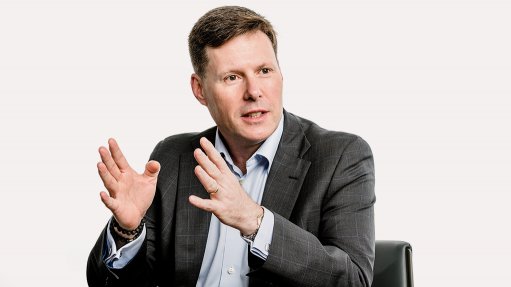
Africa is transforming and growing in importance, particularly in mining resource potential, The Beijing Axis (TBA) founder and group MD Kobus van der Wath reports.

The continent, in the past 15 years, has seen governmental, governance and political change, with positive develop- ments taking place in regulations, policies and infrastructure in many regions, TBA says.

Political stability and related challenges in certain countries are improving and, economically, Africa is seeing a better environment.

Further, there is increasing awareness of the benefits and sustainability of resource development, such as how local communities should benefit from mining activities in their area, and environmental impact mitigation.

“This, combined with a backdrop of relatively healthy growth and buoyant development patterns in most parts of Africa, has changed the context in which mining in Africa is seen and treated from a public policy, market opportunity and competitiveness perspective,” he says.

Mining provinces in some countries are also developing rapidly. Countries that were not traditionally mining destinations are becoming contenders for mining investment, through the creation of platforms to attract investors, improved governance and the development of regulatory frameworks.

For example, ten years ago, West Africa was not a significant mining destination; however, with the development of its iron-ore resources, investments are increasing, multicountry infrastructure programmes are under way and communities are developing.

Mozambique, besides other destinations, is increasingly becoming attractive for coal mining and a number of projects are developing in the country.

“Some African countries have repositioned themselves on the global economic map and within the continent to further develop their economies through mining and infrastructure investments,” says Van der Wath.

Africa as an investment destination is a broad focus, but distinctions are increasingly being made between which countries or regions different companies will invest in and the regions they will avoid.

Companies’ perceptions of risk in different parts of, for example, the Democratic Republic of Congo (DRC), such as the Copperbelt region, in northern DRC and central DRC, are different. Depending on the location of the mine, risk will be assessed accordingly.

“There are many different views on risk, the regions in which risk is more predominant, capital committed in areas of risk and how the community and mining relationship is evolving,” he says.

However, adds Van der Wath, a static view of Africa will result in being left on the sidelines. Some of the most important investments for the next 50 years in African mining are currently being made.

The initial studies and groundwork are currently being undertaken. Investing in Africa in 20 or 30 years’ time will be too late. The mining industry would already have been established and exploited, he says.

China Engaging
Meanwhile, China, along with many other countries, continues engaging Africa in a number of ways, including in mining developments.

However, China and its various com- panies enter the African market as one, with the Chinese government assisting and directing investments and various companies by using State-owned enterprises and its diplomatic channels. Many other countries have individual companies investing on the continent and acting alone.

“China’s investing in and developing of mining and other markets as one company, has been a catalyst for other countries, such as India or Australia, to also examine the option of engaging Africa as a whole, in addition to individual companies,” Van der Wath says.

China has an unfair and unequal advantage when investing and developing projects in Africa. China’s diplo- matic engagement is significant and enables the country to collectively manage all aspects of its equity investments, borrowing or lending into the continent. It also has significant sup- port from other Chinese industries, such as engineering, procurement, construction contractors and financial institutions.

While this is the way China was designed to work, not all government systems in the world allow, or have the capability, for the company approach to work for them, he adds.

China is setting out to satisfy its needs for resources but Africa is too large for one country to develop on its own.

Edited by: Henry Lazenby

To subscribe to Mining Weekly's print magazine email subscriptions@creamermedia.co.za or buy now.

Subscribe Now Login


The Beijing Axis founder and group MD Kobus van der Wath discusses the transformation of Africa. Cameraperson: Nicholas Boyd. Editing: Darlene Creamer.
This video is licensed under a Creative Commons License
GET SELECTED VIDEO
Embed
Selected Video Download (12.23mb)