GOLD 1539.22 $/ozChange: -19.23
PLATINUM 1433.00 $/ozChange: -13.50
R/$ exchange 8.32Change: -0.12
R/€ exchange 10.58Change: -0.06
 
We have detected that the browser you are using is no longer supported. As a result, some content may not display correctly.
We suggest that you upgrade to the latest version of any of the following browsers:
         
close notification
powered by
Advanced Search


Home
 
World News
 
North America
 
 
GOLD
$2 000/oz gold 'quite conceivable' in medium term – Agnico CFO
 
27th March 2009
TEXT SIZE
Text Smaller Disabled Text Bigger
 

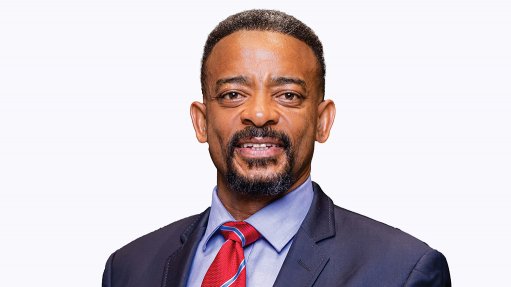
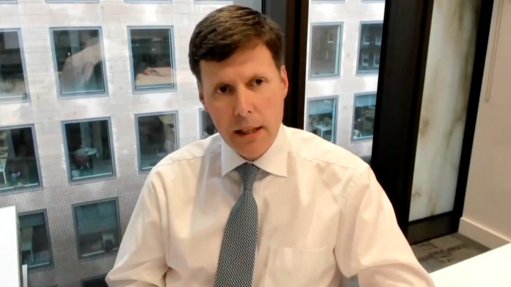
TORONTO (miningweekly.com) – The looming spectre of inflation, coupled with investors' thirst for a safe place to put their money, will likely drive bullion prices up “significantly” in the medium term, Agnico-Eagle Mines CFO David Garofalo said on Friday.

“Everybody's printing money right now,” he said in an interview at the gold-miner's Toronto office.

“And I think it almost doesn't matter how badly the US dollar does relative to the euro or the yen: they are all going to do badly relative to the gold price, because gold is the one currency you can't print.”

Although bullion set a new record high of $1 030,80 in March 2008, prices are still well below a 1980 peak of $850/oz, when adjusted for inflation.

Garofalo, who was named Canada's CFO of the Year this month, said that he could not see anything in the current cycle stopping gold from reaching a new record in real terms, which would mean prices of around $2 200.

“In the medium term, it's quite conceivable that gold could be comfortably above $2 000/oz."

He also expects gold mining equities to benefit from renewed interest, as declining input costs boost margins, making price-earnings ratios increasingly attractive to investors.

He doesn't agree that the introduction of exchange-traded funds (ETFs), which allow facilitate investment directly in physical gold bullion, has resulted in“cannibalisation” of demand for gold equities.

ETFs brought in a whole new class of investors, which more than offset any negative effects on demand for equities, he said.

“And I don't think there is anything wrong with an instrument that increases liquidity in your commodity. I think that's entirely positive for producers.”

BACK TO BASICS

With credit difficult and expensive to access, senior financial executives are going back to their roots and devoting more time and energy to improving liquidity and safeguarding balance sheets, Garofalo said on Friday.

During the first half of the decade, financial departments, including Agnico's, had their hands full in the post-Enron era of Sarbanes-Oxley Act compliance, putting in place systems that were “worthwhile” but nevertheless distracting.

Now, however, it is back to basics.

“Liquidity has become an acute concern for companies across all sectors, which means we are focused on ensuring that we have what we need on the balance sheet to keep the business growing, keep it moving.”

Garofalo, who will be presented with the CFO of the Year award at a ceremony next month, is a firm believer that finance executives must be an integral part of corporate strategic planning.

“CFOs need to be able to explain to the rest of management what is possible in the marketplace to finance any growth initiatives, and they have to come up with the money at the end of the day to see that strategy through."

DEEP POCKETS

Garofalo himself has not only kept Agnico-Eagle's balance sheet looking rosy, but has managed to keep up with one of the most ambitious growth strategies around.

Agnico-Eagle was a one-mine company going into 2008, but is now in the midst of a marathon of start-ups, with five new mines scheduled for commissioning in just over two years.

With two of the five operations already producing gold, and two more starting up over 2009, the firm plans to double production to 590 000 oz for the year, and then double again, to 1,2-million ounces, in 2010.

To fund its hefty development schedule, Agnico doubled its available credit lines to $600-million last year, raised $290-million by selling shares, and spent some $900-million on capital projects.

This year, however, spending will be half of that, at about $450-million, and will decline to just $150-million in 2010.

With cash flow steadily on the increase, Garofalo said the firm will not need to raise any more capital to fund its current plans.

It is already studying expansions at four of the mines, and will have a clearer picture of funding requirements for these by year-end, but these, too, could probably be financed internally, he said.

ACTIVELY LOOKING


The company would, however, consider raising money if it decided to make an acquisition, in which case Garofalo is confident that it would not have trouble gaining access to funds.

“For companies like us, for more established players, the capital markets are still very much open,” he said.

The firm is looking seriously at a number of development stage projects, and could make an announcement on a “strap-on” acquisition within the next 12 months.

Capital markets are, for the most part, closed to junior companies, “so yes, we tend to get a lot more traffic through here with acquisition opportunities,” Garofalo added.

Overall, merger and acquisition activity in the gold sector is likely to heat up in the coming months, Garofalo said.

“Senior and midtier companies are struggling mightily to replace their production and their reserves, and I think they are going to be more aggressive looking at the juniors for the next while.”

Edited by: Liezel Hill

To subscribe to Mining Weekly's print magazine email subscriptions@creamermedia.co.za or buy now.

Subscribe Now Login
 
 
Topics in this article


David Garofalo discusses Agnico-Eagle's acquisition strategy
GET SELECTED AUDIOCLIP
Embed
This article's audio Download (1.2mb)