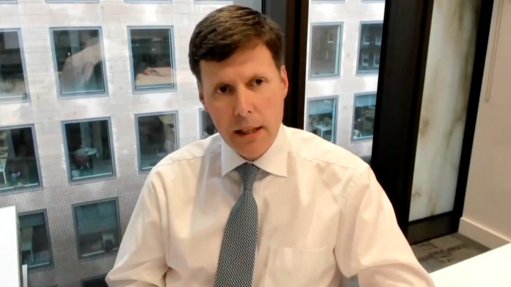
Every Friday morning, SAfm’s AMLive’s radio anchor Florence Letoaba speaks to Martin Creamer, publishing editor of Engineering News and Mining Weekly. Reported here is this Friday’s At the Coalface transcript:
Letoaba: Wits University this week opened a world-first laboratory that is targeting the mine design of the future. Well, as their pay-off line says, Wits giving the edge on this one, it seems.
Creamer: That’s right, Wits University now really going the extra mile with regards to mine design. The mine of the future, they are looking at. We have had a lot of disasters with mines, we’ve had the debacle in Chile and the problem in New Zealand.
People are looking for new generation engineers who can design the mine of the future. A splendid new world-first design laboratory opened this week with funds from the Anglo American Corporation where R9-million was poured into this place that can at one time have students mediated with network computers, 200 of them at a time.
It is really big, over 500 m2, and they are looking for sort of capstone achievement from their students from this. Also, a new era, because Anglo American itself is designing the mine of 2030, they are looking ahead.
This mine they want to be fully automated, peopleless virtually, and also zero impact organisation. So they are already looking at other forms of energy and solar power and all the other issues that are confronting the world today.
Letoaba: Ventersdorp has been in the news for different things, but it seems that the small farming town is banking on a sparkling new diamond future.
Creamer: We don’t normally think of Ventersdorp in terms of diamonds. We think of tall green mielies and the Afrikaner Weerstand Beweging, but what the farmers have perhaps not been concerned about is that there are millions of tons of diamond-bearing alluvial material there.
Etruscan, the international company, come in and did a lot of exploration and they firmed up a very good resource that can go on for 40 years. Now the Canada-listed Rockwell Diamonds, which is also listed on the Johannesburg Stock Exchange and led by top South African Dr John Bristow, a great geologist, is now turning that to account.
They are putting in a new gold plant and they’ve twinned with the local near-mine community, the Mogopa community. The Mogopa have already invested R26-million in this and they are going to be a black-economic empowerment partner.
They got those funds from the Industrial Development Corporation (IDC), which is State-owned. The IDC also has another R20-million loan invested into this. Now they are looking to actually supplying the bridal market in China.
There is a big demand at the moment for diamonds of this size that come out of Ventersdorp. One of the problems, and it is again this bureaucratic situation we have with the Department of Mineral Resources, there hasn’t been a proper change of ownership that is official.
So, 74 % has been sold by Etruscan to Rockwell, but Rockwell has had its application for change of ownership in since May 28 and now nobody quite knows where this application is. This is bad for South Africa because the local community is looking for a lot more jobs and they are really in a legal limbo, which the department needs to sort out quickly.
We saw the Constitutional Court this week give the department a slap over the wrist for the way it has handled consultation with communities. Now we find that a mining company really is having to work as a sub-contractor because it can’t get something that is pretty simple – a change of ownership.
Letoaba: You taught me something new today about road making material and I hope I say this correctly, bitumen, there is a shortage of bitumen that is delaying the completion of Gauteng’s freeway upgrade. Tell us about this.
Creamer: It might be a blessing in disguise, because it means we won’t be tolled when we travel on the freeways. There is going to be a delay, the delay at the moment is being caused once again by a shortage of bitumen, which is the main ingredient in asphalt and the black-top road surfaces that we ride upon.
We had a similar problem in April, when the big oil refineries that provide this bitumen had a shortage at that time and it was quite scary, because it was just before our World Cup. But they managed to sort things out although some of the lanes on the freeways obviously didn’t open.
Now, when you go along these freeways you see these patches of unsurfaced road and it relates to a crisis that is going on in the background with bitumen and one of our big suppliers of asphalt, the company called Much Asphalt.
They say that they are having to rely virtually solely on Sapref, which is the big oil refinery down in Durban. Of course, because it is in Durban there are logistical constraints to it getting this bitumen up here. So they are doing as best they can, but you can see now that the date of April, which was set for the start of the tolling of 150 km of upgraded freeway, that date is not going to be met.
That is what the South African Roads Agency tells us now and when you say ‘can you give us the date’ they say ‘no we can’t.’ But, they are hoping obviously within the second quarter of 2011.
We also find that the Gautrain is now also delayed, so we have got these two, Gautrain coming up June 27 and not April 27, and now also slippage in the date of the opening and the tolling of the Gauteng Freeway Improvement Programme, which is going to add a lot of lanes to the freeways and make our life better.
Letoaba: Its always interesting talking to you Mr Creamer. Thank you so much for educating me this morning. Martin Creamer is publishing editor of Engineering News and Mining Weekly, he’ll be back with us at the same time next week.